Showing posts with label comics. Show all posts

Monday, May 19, 2014

The Losers - 2003-206

I was trying to find something big but not TOO big to write about this week, and then it dawned on me - I could write about "The Losers" by Andy Diggle and Jock, which most of you have probably never heard about.

"The Losers" ran for 32 issues at Vertigo, its intended length. (For some strange reason, people often think the book got cancelled, even though the story ends exactly where it needs to...) It's collected in 5 slim trade paperbacks or 2 larger trade paperbacks, to tie in with the release of the movie, that wasn't terrible, but wasn't amazing either, despite a marvelous cast, but more on that in a bit.

It's a classic sort of revenge tale, with a group of spec ops troops getting revenge on their CIA handler who fucked them, but it's also got a lot of other big political elements that were relevant at the time, and a lot of which are still relevant now, including "the war on terror," race relations in the US, the CIA's involvement in global politics and a bunch of other stuff.

This is the book that put Andy Diggle on the scene for me as a writer, and I've mostly followed his writing career since this, although he's certainly one of the more up-and-down writers I tend to follow. Some of his projects have absolutely been amazing (such as his run on Hellblazer or his Green Arrow: Year One, a lot of which provided the foundation for the "Arrow" TV show) and some of them, well, some of them have not (*coughcough* AdamStrange *coughcough*). Mostly, though, Diggle's known for writing great dialogue and keeping stories spinning.

Jock's art, however, is certainly an acquired taste. I very much enjoy Jock's angular, almost chunky, style, because it usually fits for the type of material he's working on. It's noir-ish, and Jock has a very excellent grasp of how to darken in a scene, how to use lighting and how to give striking perspectives, but some people think his artwork is a little too raw for their liking, and I can understand that. Like I said, he's not an artist for everyone, but I dig him.

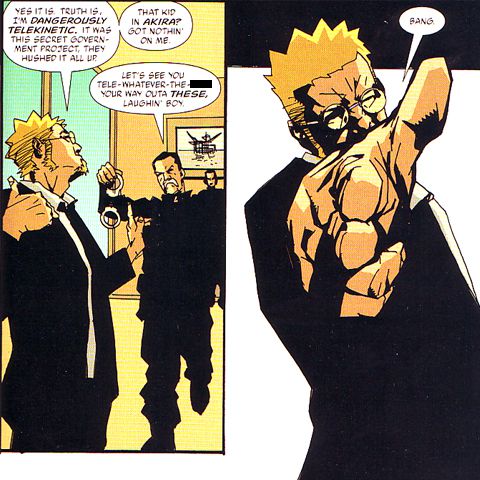
That's Jensen with the glasses..
"The Losers" is a fun tale in the tradition of "The Dirty Dozen," and the team of agents is all sorts of crazy. The plot takes a number of twists (and the last arc is maaaaaybe a bit bigger than some people can handle, a little too world super-villain and not enough grounded reality) and you're always going to be guessing where it's going to go next. The story is a complete package, though, so you'll have a nice resolved ending and feel like you've been on a big journey over the course of it. You can get the whole thing in "Book One" and "Book Two" on Amazon for your Kindle for $25, or in paper for $35 or so.

Now, about the movie... So here's the deal. It's got a lot of actors I really like in it - Idris Elba, Zoe Saldana, Jeffery Dean Morgan and Chris Evans (who basically steals the show in most of his scenes, and put him on the map for me, which made me psyched when he was announced as Captain America...) but it's... a good part of it's just a mess. The film is at its best when it's adhering closely to the source material, which means the helicopter bit at the beginning, Evans in the skyrise with the finger gun, the bits about the cash... but despite all of these amazing things they got right, oh my god what the living fuck is Jason Patric doing? Patric isn't a bad actor, but he's not even in the same movie. It's like the main cast gets they're doing "The Dirty Dozen" and Patric is convinced he's in "Batman & Robin"... you know, the one even Clooney is ashamed of. Also, the movie sticks to mostly the first act or two of the books, and the further it veers from the source material, the more it falls apart. If you're interested, read the books FIRST and then go back and watch the movie so you can enjoy the bits that are translated extremely well from the book (and to watch Evans actually dominate the role of Jensen) and then you can sort of let the rest of the stuff slide off your back...

Here's the trailer, to whet your whistle. Go buy the two books, even if the last act can get a bit operatic. You'll love them. I know I did.

Monday, May 12, 2014

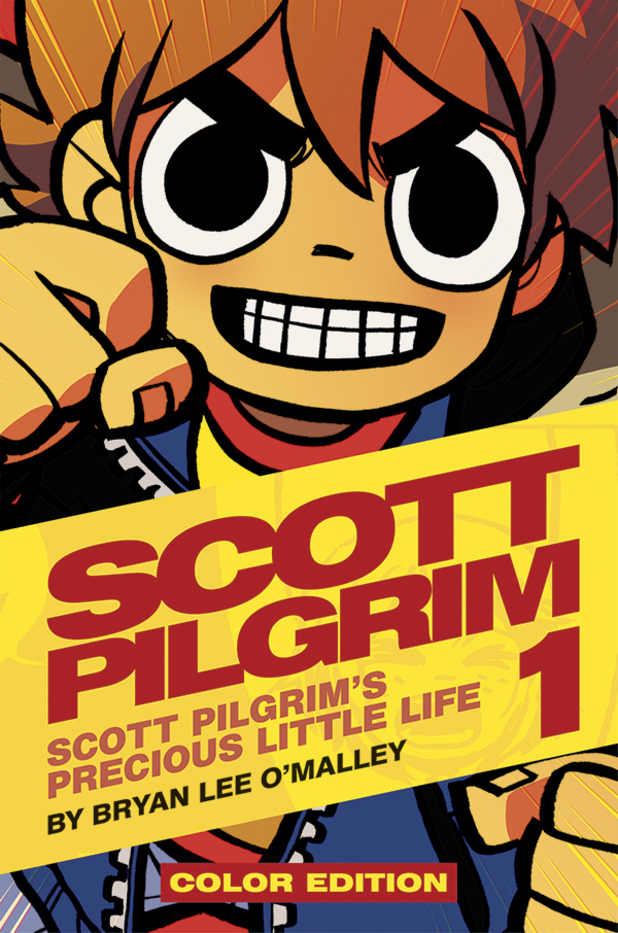
Scott Pilgrim - 2004-2010

Some of you may have seen the awesome Edgar Wright film "Scott Pilgrim Vs. The Universe," but didn't know it was based on a comic book. Some of you may not have even seen that film. In both cases, you should correct your mistake, because Scott Pilgrim is all sorts of crazy awesomeness.

Scott Pilgrim is a series of six graphic novels by Bryan Lee O'Malley, which were originally done in black and white but are being colorized now (in addition to having a few extra scenes put back in). They detail the story of one Scott Pilgrim, a Canadian slacker and part-time bass player in the band Sex Bob-omb, who's trying to get his life together and win the heart of the beautiful American trans-dimensional delivery girl Ramona Flowers. To do so, however, he must defeat her seven exes, who have formed a league of sorts. (Because, y'know, bad guys tend to hang out together.) Oh, Scott's also sort of dating a high school girl when he meets Ramona, so there's that whole mess to figure out as well.

Scott Pilgrim is probably only targeted for people between the ages of 21-40, simply because a lot of the pop culture references will be lost on everyone else. That said, it's highly improbable than anyone will get all the references on their first time through, even someone as popped out as me. There's band references, comic book references, video game references (a LOT of videogame references), television references... it goes on and on. I mean, bad guys turn into coins when they're defeated. How can you go wrong with anything that has that in it?

O'Malley's art style is a blend of manga and traditional comic book art styles, and in what seems to be the default for the book, O'Malley just takes whatever works and folds it in, so you'll see things like screentones (which haven't been used in American comics for a long time now), exploding panels, full page spreads, caption jokes... it goes on and on.

Scott Pilgrim's greatest strength, however, is its characters, and not just Scott and Ramona. There's also Wallace Wells, Scott's "cool gay roommate," who often steals the scene in almost any scene he's in. (And props to actor Kieran Culkin for getting the role pitch perfect in the movie. And, y'know, also stealing the scenes he's in...) And there's Kim Pine, Scott's high school friend (and his first girlfriend), the band's drummer who's angrier than most people would believe. Also, Knives Chau, the high school girl who's referred to as "Scott's fake high school girlfriend" early on in the book. And plenty others. Not to mention the evil exes, who are wildly diverse and mostly insane.

There's something wonderfully stop-and-start about Scott Pilgrim as both a character and a book. When it's moving forward, it feels like forward motion is the only possible thing that could be happening right then and there. When it's dwelling on a moment, you almost want that moment to last forever. And Scott as a character is the exact same way - he doesn't seem to have any 1st gear, only neutral and 4th.

And, if you haven't seen the movie "Scott Pilgrim Vs. The World," you really should. It's from Edgar Wright, who's brought you such pop classics as "Shaun of the Dead" and "Hot Fuzz," and who's directing "Ant-Man" for Marvel. (He also did a marvelous TV show called "Spaced," but I'll talk about that another day.) I've never understood why the film wasn't a monster hit, but maybe it was just too clever for its own good, a distinct possibility considering the film makes fun of hipsters more than a little bit...


The whole series is out in black and white now, and the first four volumes are in color, with the fifth one coming in June and the sixth one probably the end of this year or the beginning of next (although it could be next summer. Who the hell knows.)

Monday, May 05, 2014

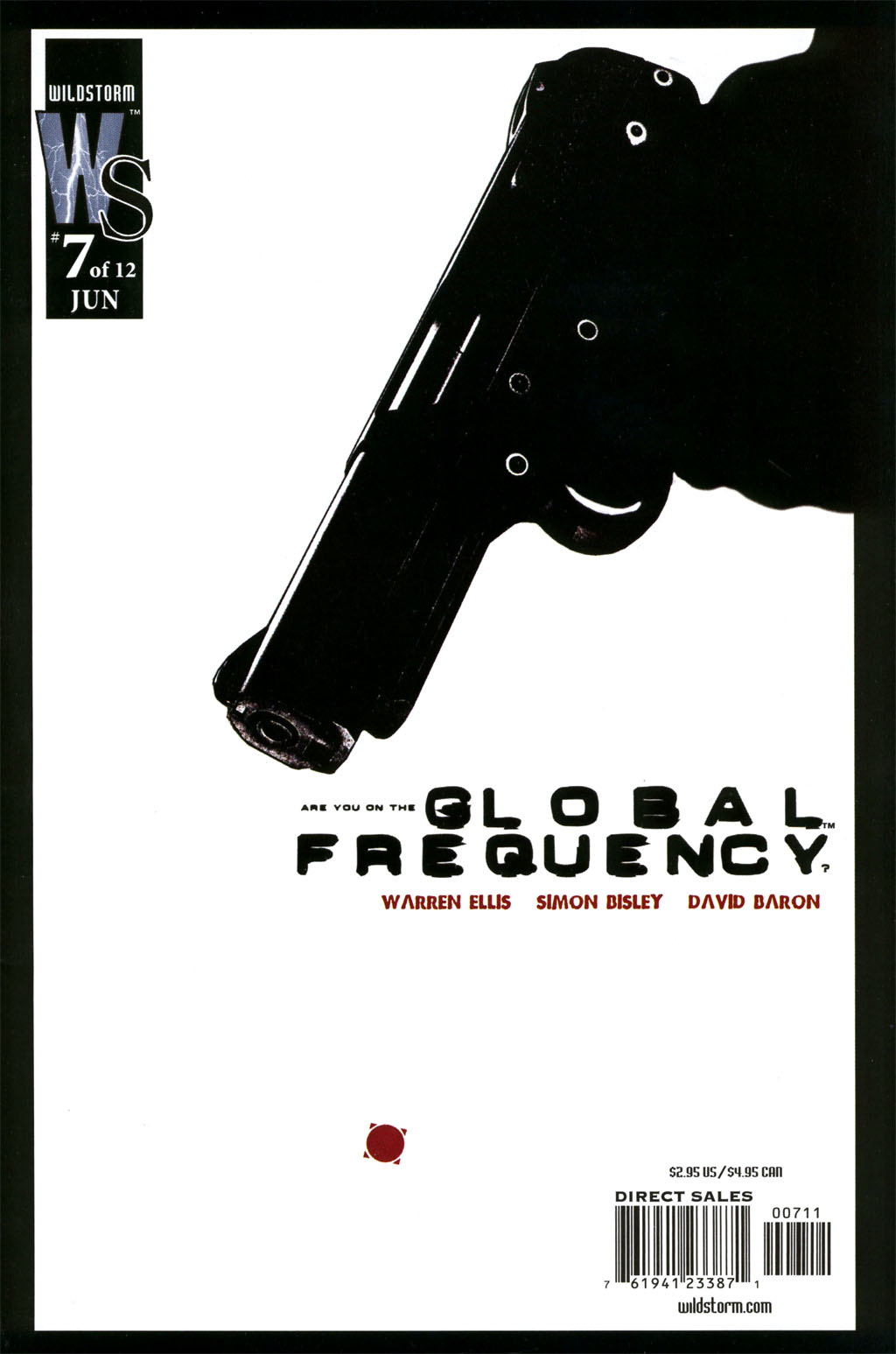
Global Frequency - 2002-2004 - Warren Ellis

"You're on the Global Frequency."

I imagine I'm going to cover most of the series Warren Ellis has finished on the blog at some point - that's a notable distinction, as he's also just abandoned a number of them - but I wanted to start with Global Frequency for a number of reasons.

First and foremost, Global Frequency is twelve issues, meaning it's not a big investment (you can pick up the whole series in one trade paperback for $15 from Amazon) and it's not a major time commitment.

Next, Global Frequency is independent of everything. It, ostensibly, exists inside our world. No superheroes, no folks in tights, no endless backstory for you to have to go digging into. Twelve issues. You're in; you're out.

Also, each issue is illustrated by a different artist, so if you find you aren't connecting with a particular style, for whatever reason (I've known people like this over the years - they can't read a comic, no matter how good it is, because they don't like the artist's style - I've never understood it), you just need to make it to the next issue. Or even just skip to the next issue. The stories are, mostly, self-contained. Each issue will give you a part of a bigger picture, but isn't necessary to enjoy any of the other stories. Although, you probably want to read the first one to get a good sense of what the concept of the book is. But I'll clue you in on that too.

There exists an independent intelligence agency known as the Global Frequency. There are 1,001 members. It was founded by Miranda Zero, who was clearly an intelligence agent... somewhere, before this. Everyone on the frequency is activated by a cell phone when they are needed by the operator known as Aleph, who is the communications hub for Global Frequency. Agents don't know anything about each other until they are activated. Each person on the frequency was chosen for a skillset and/or a region of influence.

When a crisis arises, Zero selects a team, Aleph activates it and away they go.

If it sounds a little bit like Mission: Impossible for the modern era, you aren't wrong. Ellis specifically designed the series to function like television, with each episode being self-contained so that people could drop in or drop out at a moment's notice. Also, it granted Ellis a lot more leeway in story-telling. Only Aleph and Miranda Zero were considered "safe" characters - anyone else could be killed off without warning, because it wasn't like you'd see them next issue any way. It was also planned to be exactly twelve issues, so that Ellis could work with all the available artists he had that he wanted to at the time, and then be done. He's threatened to do a sequel for a long time now. He really ought to get his ass on that.

Another part of what makes Global Frequency so damn good is that it taps into Ellis' almost fetishistic interest in beyond-the-pale technology and philosophy. Because of the concept, he could dabble in things like advanced prosthetics, Cold War psychotropic drug studies conducted by the military, mass hallucinations, etc. Each issue is framed around a "big idea" that the rest of the story hangs on, but keep in mind, "big idea" can sometimes be something as simple as parkour, which has become pretty widespread in mainstream media since then. (Although in my opinion, no one's really ever topped District B13 in that regard, but that's a post for another day.) Ellis uses the spy framework to build stories that deal with bigger questions, the sorts of questions you don't see people often asking in comics these days. And all of this on an action thread that really sings, whizzing along at top speed.

After reading Global Frequency, you may find yourself thinking that it's screaming for adaption to television, and you're not wrong. But it's been tried. John Rogers (one of the two people behind "Leverage," the best damn TV show not enough people watched) wrote and executive produced a pilot that you can find floating around the internet that was great. It was an adaptation of the first issue, but changed things around so there would be a couple more stable characters, as television often seems to need. It didn't get picked up for series. Then in 2009, supposedly the CW was looking at trying to have a go at it again, but that's half a decade ago and nothing came of it, so maybe television's overlords don't understand how badly we want it.

Then again, Ellis has supposedly been working on a number of stealth projects as of late, some of which are television related, so I can hope...

Until then, you should pick up Global Frequency and see what mad scientists will be up to in the next couple of years. Because some of the concepts he puts forth are frighteningly plausible...

Tuesday, April 29, 2014

Idlewild - The Remote Part - 2002

The year was 2002. I had just moved back from Las Vegas to the Bay Area, and NME magazine was dabbling with a radio broadcast online, playing bits of Radio 6, their "cutting edge" station on a stream free from their website.

It gave me something to listen to at work. A lot of it was crap. But every so often, something would stick and I'd find a new band. And once, just once, I'd heard a song that I became obsessed with.

That song was "American English" by Idlewild.

That silvery guitar comes ringing in the air like some long lost U2 song, and then Roddy Womble's trembling Scottish voice purrs into life over it. A few verses later, the steady base comes in, and just a bit past that, it all crashes together and the drums kick in. And as soon as the chorus kicks in, that arms-spread-wide, standing-on-the-edge-of-the-mountain, bathed-in-rain, grin-as-wide-as-the-day feeling swells over you. Or maybe that's just me.


Back then, in 2002, it wasn't easy to get music from England, and we were in a period where there was a lot of great music being put out in England. Thankfully, there was a record shop in Berkeley, next door to the comic book shop I visited then, Comic Relief, run by the irreplaceable Rory Root. The guy running the record shop imported a lot of CDs from England, and when I went in one day, he had two copies of "The Remote Part" by Idlewild, newly arrived. I grabbed one and must have had the biggest smile on my face when I went to pay for it.

"They any good?" the cashier asked me as he was ringing me up.

"If it's half as good as the single, it's fucking brilliant," I told him.

"Can you go grab me the other one?" he asked. So I did. He opened it up and popped it into the store's CD player immediately. "Huh. Pretty fuckin' good. I'll have to order more copies."

When I came back in two weeks later, they had five copies of the album in stock and it was in the "Employee Recommended" section. So I felt pretty good about that.


The rest of the album was, indeed, fucking brilliant. The first three songs were probably the strongest opening I'd ever heard on an album, starting with the intense energy of "You Held The World In Your Arms" and followed up by "A Modern Way Of Letting Go" before getting to "American English."


The album is filled with great songs, but the last song on the album, "In Remote Part/Scottish Fiction," is one of my absolute all-time favorite songs. The tail end of the song includes the poem "Scottish Fiction," read by its author Edwin Morgan, and was written specifically for the album. It's a marvelously grand bow for the album, and if it doesn't sell you on getting a copy, well, I don't know what will.


Their first two albums, "Hope Is Important" and "100 Broken Windows" have great songs on them, but are a touch uneven, and the band is still finding their footing on them, so I came in at exactly the right time. They've put out three great albums since releasing "The Remote Part" in 2002 - "Warnings/Promises," "Make Another World" and "Post Electric Blues," as well as a couple of greatest hits collections, "Idlewild - The Collection" and "Scottish Fiction: The Best of 1997 - 2007" and maybe we'll get something new this year, or next.

I don't have a lot of sad concert stories, despite the fact that I've seen over a hundred shows, but I've always been sad that Idlewild cancelled their last tour. I mean, I understand - Rod Jones, the band's guitarist, broke his collarbone - but I've never seen them live, and I truly want to. Then the band went on hiatus and it looked like they might be done for good. But I was happy to see the band reunited late last year and is working on recording a new album, and I truly hope they'll play the American dates they had to cancel on back in 2010, because they are one of the very few bands on my list of favorites I have yet to see live. So if they do tour the states, I'll see them, no matter where I need to get to.

They're that good.

Monday, April 28, 2014

Queen & Country - Greg Rucka - 2001-2007

It's no secret I love me a good spy story. The problem is that the comics world has, surprisingly, not a whole lot of good ones. Oh sure, we get a few odds and ends here and there, and I treasure each one that we get, but often they don't run long, or they tend to gloss over the sorts of stuff I find fascinating.

Greg Rucka's "Queen & Country" wasn't short and it wasn't afraid to get down to the nitty-gritty.

The series ran from 2001 to 2007 from Oni Press, and focused on SIS, the Special Intelligence Service for Her Majesty's Government, aka England. The main protagonist is Tara Chace, one of the Minders, aka the field agents.

Q&C draws its inspiration from a British television show called "The Sandbaggers," which aired from 1978 to 1980, when its creator, Ian Mackintosh, mysteriously disappeared. Seriously, you have no idea how much like a spy story the man's disappearance is. According to reports, he and two others were flying over the Gulf of Alaska, they made a short unscheduled stop at an old WWII era disused airfield, then shortly after, send a brief mayday signal and vanished.

The report was that the plane had crashed and all aboard were lost at sea. But there have been a bevy of unanswered questions about that day, wreckage was never found, and a guy even wrote a book about it. The prevailing theory is that Mackintosh is either living a new life somewhere or defected to Russia. No one's really sure. The hope was that there would be more clarity in 2013 after some things were declassified, but I haven't seen any real updates, so it looks like his fate is still unknown. How cool is that?

Part of the appeal of both Q&C and Sandbaggers is that they are very authentic portrayals of espionage work, i.e. there's lots of office work, planning, sitting around, discussing things, in addition to the more standard action fare.

Sure, James Bond is the go-to for showcasing big splashy set pieces, but actual espionage work has a lot of sitting and waiting, having to be ready, for when those moments of action do occur, they're often sudden and without warning, and there's no time for hesitation. It's hurry up and wait in the best and worst possible way.

And the office politics, oh man, don't get me started. You think your office has complicated squabbles... imagine if you knew that everyone you were arguing with was a trained soldier with high intelligence, excellent marksmanship and occasionally flexible morality, as needs might call for. And then throw in the fact that the government you work for doesn't often know what to do with you or your team, isn't sure they're making the right calls, wants to think about things forever, wants to second guess you and your information, and reserves the right to insult you if anything goes wrong, whether or not you listened to them in the first place. It's not just a nest of vipers, it's the whole damn pit.

Another part of what makes Q&C so compelling is Chace herself, who is both highly capable and an utter mess, as it feels like many people in the espionage field are. We see Chace, warts and all, being dangerous and smart, and yet still coping with personal problems and political struggles. 

After the series' conclusion, Rucka's written three novels continuing the stories, but I've always felt that Q&C sung better in illustrated format. That said, there's been the potential of a movie circling around for a while, with Ellen Page supposedly in negotiations to play Chace, and a director officially being announced in March, but as with all comic book translations, I won't believe a word of it until I hear the movie's actually filming.

Q&C isn't the only successful espionage comic, but it's certainly had one of the longest runs, and it's easy to pick up, in 4 collected volumes, and all three novels are easily available as well.

Monday, April 21, 2014

The Boys - 2006-2012

So on Mondays I'm going to talk about larger things, starting with today. Today I want to talk to you about "The Boys," but first, absolutely no kids allowed on this one, because "The Boys" has absolutely everything in it that parents probably want them to steer clear of.

Over the top violence? Check. Sex with body parts drawn? Check. Profanity? Abso-fucking-lutely. A cast of characters where lots of them are pretty appalling people? You bet. A cynical world-view that can, at times, be bleak and oppressive? Damn straight. But you'll also get some of the finest gallows humor, superhero deconstruction and effective storytelling that's ever hit the comic book pages.

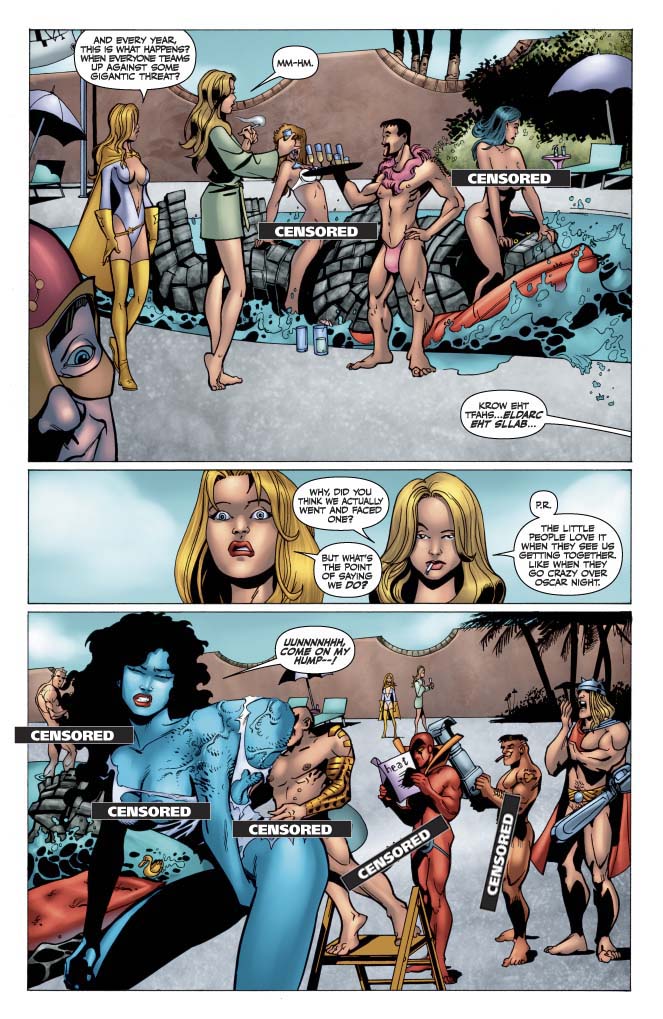
"The Boys" began its life over at DC/Wildstorm, and saw all of six issues published there before the book was cancelled, but it was picked up shortly thereafter by Dynamite Entertainment, and quickly became one of that publisher's most successful titles.

DC, it turns out, thought maybe it was a little too dark for them, although they really should have known what they were signing on for. After all, the two creative forces behind "The Boys" were writer Garth Ennis, whose "Preacher" was one of the biggest smashes DC's other imprint Vertigo ever had, and artist Darick Robertson, who with writer Warren Ellis had done "Transmetropolitan" with Vertigo (and believe you me, we'll do "Transmetropolitan" on one of our big Mondays sometime soon).

These were two guys who didn't want to push the envelope, they wanted to rip the damn thing up. But the violence and profanity in the first few issues of The Boys weren't really that far past what the other two series had done. It wasn't until the book relaunched over at Dynamite that it went from a hard-R to the NC-17 nasty masterpiece that it is. So what was the problem that got them cancelled from Wildstorm?

Ennis has said in interviews since that DC was really uncomfortable with the anti-superhero tone of the book, and that moving to Dynamite was what let the book to thrive, because they weren't on the hook to anybody over there. Dynamite didn't want them to reign it in - they wanted them to let loose. Nudity, violence, profanity - let loose the dogs of war, if you will. Dynamite wanted to see what Ennis would do with no one around to tell him "no." And that was that. "The Boys" could let its freak flag fly as high as it wanted to.

See, "The Boys" is really an upending of the apple cart that is superheroes. It's a book that takes the core conceit of superhero stories and gives it a good old slap on the ass. "The Boys" are a CIA sponsored unit whose job is to keep superheroes in check when possible, and to "deal" with them when not. When superheroes sprung forth into the world, they became instant celebrities. Some of them dealt with it better than others. "The Boys" are given a chemical to turn them into super-powered beings, so they can handle superheroes, but really, this just means they're insanely strong and tough. In many ways, "The Boys" are old-school legbreakers. And that's part of what makes this series so goddamn entertaining.

There are five members of "The Boys." First and foremost, there's Butcher. Billy Butcher is the leader of The Boys, and has been around the longest. He's loosely based around Michael Caine in "Get Carter." He's friendly, jovial even, but you also know right away that he is absolutely deadly. He's a soldier. You'll know that right at the start.

Next is Mother's Milk. He's sort of Butcher's right hand man. He's the only American on the team. He's an ex-Ranger, ex boxer. If they ever get a movie off the ground, I can see someone like Terry Crews playing him. Despite being probably the nicest guy on the team, he's ... got lots of family issues. On a lot of levels.

You have The Frenchman. He's crazy. He's scrawny. He's also half of the team's "muscle," because he's pretty insanely ruthless. He's fun, simply because you're never exactly sure how much is an act and how much is genuine psychosis.

There's The Female. She never speaks. She's the most deadly member of the team. She's also the most mysterious, and throughout the whole of the series, you still won't learn all that much about her. A little, yes, but probably not as much as you think you're going to.

And lastly, and perhaps most importantly, there's Wee Hughie, who is modeled after British actor Simon Pegg. Hughie is the new guy to the team, and the book opens with his recruitment, and it's through his eyes we get introduced to the world of "The Boys" when a superhero accidentally kills his girlfriend right in front of his eyes, and sends him into shock. Hughie is the character we come to know the most, and best, through the course of the series. And while he goes through some changes, probably the most impressive thing about Hughie is that at the end of the day, he's always Hughie.

At the opening of "The Boys," Butcher is starting to get the gang back together, but Mallory, the other co-founder of the group, isn't interested in rejoining, so this is why Butcher gets Hughie. Because The Boys needs to be a group of five.

I don't want to tell you too much about the whole story, but I can tell you a few things - you'll end up seeing parodies/homages to many familiar hero archetypes, and the more invested in comics you are, the funnier all of this will be. You'll see things that will remind you of characters from both of the two big houses, as well as a bunch of stuff you know they'd never dare to print. I mean, shit, one of the arcs of the series is called "Herogasm." You can extrapolate for yourself what to expect from that, I imagine.

This isn't a short story, so you'll probably want to delve in a little bit at a time. All said and done, "The Boys" has been collected in 12 trade paperbacks, or 6 oversized hardcovers. (In researching this article, I found there will also be "omnibus" editions in the near future, starting in July. Best guess from the description/page count is that there will be 4 or 5 of those.)

I know that sort of commitment can sound intimidating, but you should trust me on this - it's worth it. If you pick it up in collected form, in any collected form, you'll get all 72 issues of the main "The Boys" comic, and the three miniseries - "Herogasm," "Highland Laddie" and "Butcher, Baker, Candlestickmaker" - in their correct placement in the series. You'll get the sort of big screen epic that you really can't get from the big two.

For a long time, I wondered why most superhero stories never felt all that, well, real. After The Boys, I understood why. Don't get me wrong - I love superheroes, but when you see them in a horrible warts-and-all approach, where a few of them are good, most of them are indifferent and a bunch of them are kind of assholes, you start to see superheroes as the people rather than the mask. But even with that, The Boys has a great big storyline full of twists and turns, of horrible things but also of love and heroism, the true kind.

Still hesitant? Here, you can go read all of issue one, free and online, from the publisher, to whet your appetite - just click here. (It looks like there's a bit of a problem with it when I loaded it up, so your mileage may vary, but it'll give you an idea of what you're in for.) Trust me, if you like your stories dark and feral and sticky with just a hint of nobility around the edges, it's hard to beat The Boys.

Monday, April 14, 2014

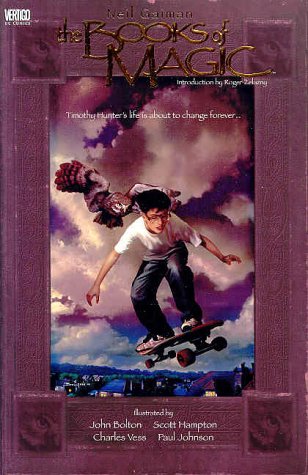
The Books of Magic - 1991

I've had a mixed relationship with Neil Gaiman over the years. He's written a bunch of things I've loved and a number of things that just haven't connected with me, for whatever reason. Fair enough. But for me, it all began with one thing - "The Books Of Magic."

BoM was a four-issue miniseries that was originally conceived to be a sort of tour guide of the more mystical characters floating around the DC Comics universe. The Vertigo universe was starting to coalesce (the imprint would be officially launched in 1993), and DC was trying to get a good handle on who belonged where.

The premise of the story is that a young man named Tim Hunter has the potential to be the world's greatest magician, or the world's most deadly. To ensure that Tim goes into this choice with his eyes open, four of the biggest mystical heavyweights decide to give him a tour, so he can make a decision about what he wants to do with his life at least informed about what lies before him. Each of the guides will show him a different facet of the mystical world around him that he's been unaware of up until now. The guides are jokingly referred to as "The Trenchcoat Brigade." It's a fitting appellation.

Each of the four books of BoM has a different artist, which helps set the tone for each book.

The first book, a tour of the roots of the magic in the DC universe, is led by The Phantom Stranger, and is illustrated by John Bolton, whose artwork I fell in love with from this moment on. One of these days, I hope to own a piece of his original art, preferably one from this book. We learn where magic begins in the DC universe, and how those early days would shape so many things to come later.

The second book, a tour of the modern day magic in the DC universe, is led by John Constantine and is illustrated by Scott Bolton. This was my first introduction to John Constantine, and since then, I have gotten every trade paperback Constantine is in, and the character is one of my absolute favorites (and it's breaking my heart what they're doing with him at DC now). This book alone is absolutely worth the cover price.

The third book, a tour of the fae and faerie realms, is led by Doctor Occult and is illustrated by Charles Vess. I'd find myself seeing a lot more of Vess shortly after this book, as Books of Magic is what launched me into reading Sandman, and he made a bit of a splash over there.

The fourth book, a look at the possible future of magic, is led by Mr. E and is illustrated by Paul Johnson. Johnson's since retired from comics, which is a shame. I rather liked his painterly style, and would've loved to see more books from him, but he found his options limited and is now, if the internet is to be believed, an acupuncturist.

Books of Magic represents one of my favorite graphic novels, and I think I may even have to buy a new copy of it soon, the spine's been worn so much. I read this book generally once every year or two, and each time, I still find the story wonderful. The raw beginnings of magic. Zatanna calling out Constantine. Titania and Oberon. The wonderful final twist.

If you're thinking of dabbling into comics, The Books Of Magic is a great place to start - it's self-contained and will give you a good idea of the players and the landscape that made up the mystic section of DC Comics around 1990. Hopefully DC finds its way back to making this kind of top shelf entertainment soon.

Wednesday, April 09, 2014

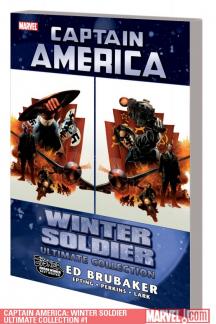
Captain America - The Winter Soldier Ultimate Collection - 2010

"Hey Cliff," I hear you saying, "I just saw the new Captain America movie and I would love to know more about where all of this Winter Soldier stuff comes from. Can you help me?" Relax, fearless reader, I got your back.

In 2004, a writer named Ed Brubaker wrapped up his exclusivity contract with DC Comics, and was a free agent again. He walked into Marvel's offices and they asked him, "What do you want to do?" He told them he had a pitch for Captain America. He detailed it out. They said "It's all yours."

Keep in mind, this is 2004. The "Iron Man" movie wouldn't come out for another 4 years. The Disney buyout of Marvel wouldn't happen until 2009. Marvel was just starting to regain its footing, and Brubaker's run on Captain America was one of the biggest lynch pins in that, following in the footsteps that Brian Michael Bendis had been doing with Daredevil (springboarding off of the relaunch that writer-director Kevin Smith had given it in 1998). Brubaker would write Captain America for eight years, wrapping up his run in October of 2012. The most recent series has been written by Rick Remender and it's, well, it's no Brubaker, let's just leave it at that. I realize Remender is trying to do something radically different, but, hell, I don't think I really wanted something radically different.

So, here's the thing - Captain America is a tough nut of a character to crack, much in the same way that, say, Superman is, but for different reasons. With Superman, you have the "overwhelming force" problem. Part of Superman's schtick is that he's basically power without limits. That means to tell interesting stories, you're limited in the kind of tales you can tell - Superman grapples with the morality of his overwhelming powers versus the common man, Superman copes with being an outsider, or Superman's powers are reduced and/or he finds a foe as strong as he is. There's only so many times the kryptonite card can get played before readers go "this again?" And it's hard to relate to Superman, because, well, he's got more power than we're really even able to comprehend. We as an audience are more likely to relate to shy Clark Kent than we are Superman.

Captain America had a similar problem in the Marvel universe, in that there were a limited number of stories people could really tell with him - Captain America's classic "man out of his own time," the world's changed, the burdens of leadership and the pressures of not fitting in. For much of the 1990s, the idea of Captain America even seemed antiquated, awkward, because what did the idea of "America" even mean? Mark Gruenwald (who wrote the incomparable "Squadron Supreme") tried to make Cap a relevant character, having him deal with political and social issues, but it still just didn't seem to work. They tried getting Rob Liefeld to make Cap popular again (as part of the disastrous Heroes Reborn event) but it just didn't connect.

Then 9/11 happened.

In the aftermath of 9/11, Captain America revealed himself as Steve Rogers in the Marvel Universe, and the Avengers collapsed. Rogers joined S.H.I.E.L.D. And that was about where Brubaker came in. See, Brubaker's pitch was that he wanted to do two things - he wanted to tap into the sort of 1970s paranoia that was highly relevant to today's modern political/espionage landscape, and he wanted to bring Captain America into the modern age, not by struggling with it, but by trying to figure out not just what he meant in this new world, but what the idea of being Captain America meant. He wasn't going to take the boy scout approach that so many writers had taken with Captain America, but wanted to really evaluate what sort of image a person who bore the name "Captain America" and who had fought in World War II would have of the country he resided in now. It was time for Captain America to stop living in the past and start adapting to the present, all the while struggling with old foes and adversaries from his past who had already adapted to the modern age.

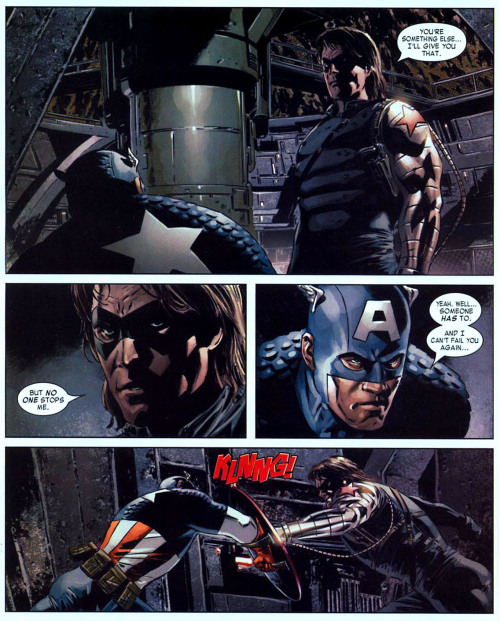
Brubaker's run isn't flawless, believe me (the "Death of Captain America" and "Captain America Reborn" storylines are somewhat shaky), but when Brubaker's at the top of his game, his Captain America run is something truly special, the kind of pop-spy fiction that we don't get a lot of in comics these days. The start of Brubaker's run is pretty important, because it lays a LOT of the groundwork that's seen in the new Captain America movie, and you can get in on that with "The Winter Soldier Ultimate Collection," which collects the first two books of Brubaker's run on Cap. If you still want more after that, you can move on to "The Red Menace Ultimate Collection," which continues Brubaker's run. Both are great investments. Steve Epting was a great artistic match for the neo-noir spy stories Brubaker wanted to tell, and the two were a match made in heaven. You don't really need to know more than the basic origin story of Captain America to get into either of these, so if you want to read the books where the movie drew inspiration from, this is the place to go. (Hell, if you're eagle-eyed during the movie, you can even spot Brubaker making a quick cameo. I think he'd earned it...)

I would have been content for Captain America to continue being a new-wave espionage story even after Brubaker left, with the new writers picking up the mantle of "how do you be a good guy in a world where it's increasingly hard to tell the difference between the good guys and the bad guys?" as well as the "the actions of the past always have ripples on the actions of today" second layer Brubaker laid down, but Remender seems intent on taking Cap into less grounded territory, maybe to try and prevent any comparisons from his run and Brubaker's, which is unfortunate. Marvel needs to understand that its audience is mostly older people now, and while it's good to make sure you have titles aimed at the younger audience, you also need titles aimed at the older audience who are looking to find stories that appeal to them. Thankfully, there are a number of books that Marvel's putting out that work, and that are starting to fill that gap - Matt Fraction's "Hawkeye" (although it's certainly more light hearted) as well as Nathan Edmonson's "Punisher" and "Black Widow," but both of those titles are just starting, so I'm judging from early days. Jonathan Hickman's "Secret Warriors" tried to do the espionage thing, but it was too mired in Marvel continuity and frankly just too hard to peel open. The potential was there, but Hickman's work as of late has felt like the kid who's too cool for what he's writing, keeping things a little too aloof and too inaccessible. His run on the Avengers has been a pretty big letdown, feeling more like an attempt to recapture what Warren Ellis did with "The Authority" but with Marvel characters, and it just doesn't work. His "Infinity" crossover was, I think, the sign that too many balls were in the air at once. I'd love to see someone do a S.H.I.E.L.D. comic focusing on Nick Fury and maybe a handful of agents that didn't go so far down the rabbit hole, written by someone like Brubaker, or Greg Rucka. Hell, I'd love to take a shot at writing one, but someone would have to convince Marvel to give me a shot at writing something. So Quesada? Call me. I've got a pitch that would knock your socks off...

Monday, April 07, 2014

Switchblade Honey - 2003

Over the life of this blog, I'm probably going to end up talking about everything Warren Ellis has ever written, but I wanted to start with one of the gems that a lot of people don't often see - the 2003 graphic novel "Switchblade Honey."

"Switchblade Honey" is a standalone story that has no relation to anything else, and sprang forth, as Ellis tells it in his introduction, as a side effect of his friendship with Patrick Stewart. I won't spoil the wonderful anecdote that he tells in the intro, but the part I will tell you is that he eventually decides he wants to write a sci-fi story where someone like Ray Winstone was the captain. Winstone isn't well known here, despite appearing in high profile films like "Sexy Beast" and "The Departed," but in England, he's known for playing a real force of nature. So Ellis set out to take all the conventions of Star Trek and mainstream sci-fi spaceship stories around that time and spin them utterly on their head.

At some point in the future, the human species has gone interstellar. They end up meeting the Chasta, and they make an utterly horrible first impression. So the Chasta decide to wipe humanity out of existence. They're working their way backwards towards Earth, killing every human along the way on their path to the homeworld. And they're encircled our solar system, boxing us in as they press forward.

Since all conventional thinking has failed, the remnants of humanity decide to think way outside of the box - they get a disgraced captain, John Ryder, give him a one-of-a-kind prototype ship they aren't even sure fully works, let him pick a crew of fuck-ups and criminals, and set him loose. If they can't be the army, they can be the guerrilla fighters. And they don't have any support at all. Even their own people won't recognize them. They are the absolute last ditch effort of a species desperate not to be wiped out - us.

It's a rogue's story, but rogues on the side of angels. Ryder and his crew are troublemakers of the highest order, but they're doing what they think is right, because they don't want to be the only five humans left alive. There's some sense of expectation, to try and save the species, even if a lot of it isn't worth saving. (Suffice to say, the Chasta's dim view of humanity isn't entirely unwarranted.) But some of it is, and that's enough. That has to be enough.

We'll talk more about Ellis again  later, as he's written a number of things that I utterly adore and not enough of you have read. I picked this one today because it's obscure enough that a lot of Ellis fans haven't probably read it, and those of you who haven't read anything of Ellis at all will have a nice self-contained piece that won't run you an arm and a leg, and doesn't trail off in the middle. The trademark things of Ellis are mad-cap characters (check) and razor-sharp dialogue (check), and you'll find them in spades here.  Perhaps the only downer about this particular book is that it's black-and-white, as I think having color would've helped the entire piece, but hey, it's a book about space, and space does have a lot of black.

Friday, March 14, 2014

John Constantine: Hellblazer - "Dangerous Habits" - 1991

What with the announcement that they're doing a Constantine TV show pilot, I wanted to talk a little bit about "Dangerous Habits," one of the comic book series' best storylines. Supposedly the TV version of Constantine won't feature him smoking, so this particular storyline would need some fairly major changes if they were going to try and incorporate it at some point (which I assume they would).

John Constantine is a magician of the streets of London, who is as much a confidence man as he is actual blue-collar magician. He's known for being mostly self-serving and of having a nasty problem of most of his friends getting caught up in the crossfire of his life. A lot of people describe him as an antihero, but I've always preferred to think of Constantine as the Raymond Chandler version of a sorcerer, sort of the hard-nosed detective turned spell slinger. Many of the best of the Hellblazer stories certainly unravel like mysteries, but they are also dark, manipulative things, and while there's almost also some element of deadly magic involved, we're often reminded that the most thing in existence is the human heart, sometimes even Constantine's own.

When "Dangerous Habits" opens, Constantine is dying. Not from any scheme gone awry or any enemy finally catching up with him, but of terminal lung cancer, the cost of his having been a constant smoker for longer than anyone can remember. Over the course of the storyline, Constantine finds out that not only is cancer killing him, but that the forces of Hell are more than a little eager for John to shuffle off the mortal coil and into their clutches. You see, John's been a real pain in the ass for Hell for a very long time, and the ruling class of Hell take that kind of personally, because not only has he been a thorn in their side, he's been a real prick about it, taunting them and insulting them every chance he gets. (They shouldn't feel too bad about it, really; that's sort of Constantine's M.O. for anyone he doesn't like, angel or demon alike.)

It helps to know a little bit about Constantine as a character before the "Dangerous Habits" storyline, but it also works as a cold open for the character. My first exposure to Constantine came from "Books of Magic," Neil Gaiman's four issue mini-series that sort of gave a sightseeing tour of the more mystical parts of the DC universe, and Constantine was one of the four tour guides in that series, and I liked the character right from the start. He was smug and arrogant and just the right amount of condescending without being an utter prick.

I don't want to spoil too much about "Dangerous Habits" - it's only six-issues, and has been collected in a trade paperback that should be picked up if you have a chance. Ennis continued writing Hellblazer for a while, and had a number of other good stories, and he also used his success to springboard into launching "Preacher," his extremely well-regarded series from Vertigo, but we'll save that for another day...

Sunday, March 09, 2014

Wanted - 2004

I very much have a love/hate relationship with Mark Millar as a writer. On one hand, he's written a bunch of books I've really liked over the years. On the other, his public persona is all the worst aspects of P.T. Barnum and Billy Mays mixed with a WWF wrestler from the 1980s. (If you think I'm kidding about this, you need only read one of the missives he puts down in the back of any single issue of his comics of the recent years, where he talks about how everything he has coming out is better than anything ever put out in the history of comics. Seriously.) Add in the fact that when he's off, he's really off, and you have a writer I feel like I need to consider quite carefully before I pick anything of his up.

All that said, "Wanted" is one of my favorite books of the last decade. There was a movie made about it that was good, but veered so much from the source material as to be almost unrecognizable.

"Wanted" is about supervillains.

The concept isn't all that complicated - it's a world without superheroes, and the supervillains have taken over, but they aren't all crazy and in the limelight. They've learned that the best way to rule is from the shadows, and while they get occasionally crazy, they also tend to keep a lot of it in check and under the covers. They're sort of like the Mafia and the CIA all rolled into one, but, y'know, with super powers.

Wesley Gibson is the protagonist of the book, and also the narrator, although there are a lot of points where you feel like Wesley is doing an impersonation of the narrator of Chuck Pahalniuk's "Fight Club," all self-loathing and nihilism and despondency. Wesley, as it turns out, is also the son of the late great, Killer, one of the most powerful supervillains out there, who was recently assassinated. The Fraternity (which is what the organization of supervillains is called) want to recruit and train Wesley to take his father's place, and to help them find out who killed their father.

In a lot of ways, Wanted is a classic hero's journey told from the flip side. Instead of teaching Wesley how to be good and noble, they teach him how to be evil and self-serving, how to not only endure violence but how to revel in it. And, like the classic hero's journey, they teach him how to fight, which comes pretty naturally to him.

As you read Wanted, you're probably going to feel pretty conflicted about how you feel about it, which is good. Wesley turns from walked-all-over to one-doing-the-walking relatively quickly, and a reader with any moral compass at all will say he's overcompensating and going too far in the other direction, which is of course the point. Wesley reaches the depths of humanity and keeps on digging, committing murder, theft and other horrible acts pretty mindlessly, without seeing it have really much of an impact on Wesley's psyche. It's the story of a supervillain told by a supervillain who doesn't have any regrets over what he's become, and has contempt for anyone who can't do what he does. The book's going to make you feel a little squeamish, and that's by design. Millar wants you to see what life would be like for a supervillain who got away with living that sort of life, and J.G. Jones turns in an absolutely amazing collection of art. Jones is mostly a cover artist these days, much to my sadness, because he knows how to fill up panels with all the details they need, and how to pull focus in dramatic angles and lightning like a good film director, and "Wanted" is him firing on all cylinders. At some point, I hope to track down one of his original pages from either "Wanted" or the "Marvel Boy" miniseries he did with Grant Morrison.

The other great thing about "Wanted" is that it's a self-contained story - you don't need to get any other books, and I don't think we're likely to ever see a sequel, which is fine. This book tells you the entire story you need, and you don't need a page more. "Wanted" is sort of the end-of-the-line of the approach that "Watchmen" and "Dark Knight Returns" were putting forth in the 1980s - this is as dark and gritty as you'll ever need to get. But it's also a hell of a story. This one Millar hit out of the park. Just don't get me started on how much I hate "Superior."

Thursday, February 27, 2014

The Thanos Quest - 1990

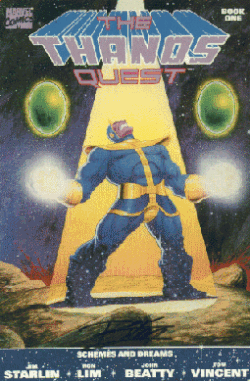
I remember when I started exploring more off beat comics. I'd really started getting into Chris Claremont's Uncanny X-Men and was at Dragon's Lair enough that they were okay with me browsing through the racks a bit, picking up books, reading a few pages and then putting stuff back or deciding to pick it up. Comics were, at that time, about a buck fifty, if memory serves me right. It was 1990, so my memory isn't perfect, considering that's 24 years ago. But I tended to start sniffing around for other things, because while I loved X-Men, I was interested in finding new titles, new characters, more things to be reading. In just a short year or so, I'd be reading Neil Gaiman's Sandman, on the back of another short mini-series I'll talk about in a different post, but I remember this cover for a book called "The Thanos Quest" catching my eye.

I asked Bob about the book, and he said "Oh, Thanos is a Silver Surfer villain. It's only going to be a two-issue mini-series, but they're big issues, thus the higher cover price." I glanced at the cover of the book - it was significantly higher than your standard book. But there were also a lot more pages. And I read the first few pages, and decided, what the hell - it was only two issues, so if I didn't like it, I hadn't lost much.

Thank god that I took the risk.

So, here's the thing about Thanos Quest - Thanos is the protagonist, and yes, he's certainly more than a little crazy, but he's also, well, Shakespearean. The main thrust of the story is that Thanos has fallen in love with Death. No, not death with a lower case d, but Death, the personification of the higher power of dying in the universe. She's cold, aloof and not easily impressed, but Thanos wants to win her heart (if she even has one). To do so, he sets about to commit an act so grandiose, so impressive, that he's certain it will win her over, and to consider him worthy of her love. What could be so impressive, you ask? Well, she wants him to wipe out half the population of the universe in a single go. No small feat, obviously, except Thanos, smart lunatic that he is, has found something of a shortcut.

Thanos has discovered six gems, called the Infinity Gems, each with a special property over a feature of the universe - time, space, power, reality, the mind and the soul. With these six gems, he will able to wipe out half of the universe with the snap of his fingers.
Of course, he's got to pry the gems from the hands of their current owners, and none of them are want to part with their gems easily. But Thanos has a plan, and is more than clever enough to pose a threat to the gem's handlers, because he knows what the gems are capable of, and they don't. Also, Thanos, for whatever else he is, is incredibly smart. He plans to out think his opponents, and while some of his foes aren't too bright, there are a couple that are more than enough to be a challenge to the mad Titan called Thanos.

I was just starting to understand the idea of the crossover, where a bunch of characters appear in other titles to get exposure from one audience to another, but I wasn't really part of any of the audiences at the time. Thanos Quest was a book I picked up almost entirely at random, but it set the stage for the Infinity Gauntlet crossover that happened a few months later, and I picked up all six issues of that. The Infinity Gauntlet spun out of the events of Thanos Quest, and set the stage for Adam Warlock and the Infinity Watch to follow, although that series wasn't great.

Over the years, Thanos has worn a lot of hats in the Marvel universe - villain, god, reluctant hero, hermit... and with all of that comes one of the more interesting characters they have. Thanos Quest was collected in a one-shot in 2000, and can be found as part of the Silver Surfer: Rebirth of Thanos trade paperback, or picked up digitally. Also, Thanos is the villain you see in the teaser at the end of the Avengers movie, so we're going to see him in the Marvel cinematic universe sooner or later. This is the place to start.

Wednesday, February 19, 2014

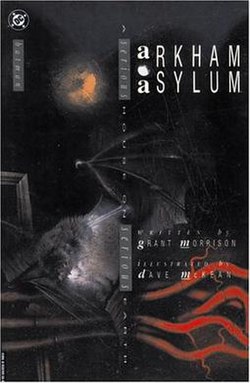
Batman - Arkham Asylum: A Serious House On Serious Earth

When people ask me what should they read when they're first getting into Batman comics, I have a very elite list I give them. There are five collections that will show off the highlights of the Batman universe and mythos. Let me share that secret list with you now:

These five books will give you a wide berth of  Batman stores in a variety of styles. Yes, Frank Miller's on the list twice, but he really did create what serve as the bookends of Batman, and I'll visit those stories in a later post. Today, I want to talk about the first one of these I actually read - Arkham Asylum, and how it introduced me to two people whose careers I've followed religiously since.

It must have been 1990 or so, when I was branching out into more comics, having been hooked initially by Suicide Squad and jumping from there into Chris Claremont's run on Uncanny X-Men, and I was going to a comic book shop in Omaha called The Dragon's Lair, which is still there today, having opened a year before I was born, all the way back in 1975. The owner, whose name is Bob, had two loves: new customers and ping pong. He and the other guy who always working there (a tall gentleman whose name has been lost in the recesses of my youth) were always happy to introduce young and impressionable minds to new titles. They had opinions and were always willing to talk about what they did and didn't like, a trait I've found to be pretty common for people who work in comic book shops. I know I was chatty for the month or so I worked in one after college.

I remember asking what sort of titles were out there that were more mature that the sort of popcorn storytelling I saw in a lot of the books at that time. I had been drawn to X-Men because the issues weren't always "case of the week" style, wrap-it-up-in-one fiction that seemed to be pretty common, and the characters had motivations I could understand - wanting to fit in, wanted to belong, wanted to understand why you were different. So Bob handed me Arkham Asylum, although he warned me that it was kind of strong stuff. I was 13 or so. He was absolutely right. It was very strong stuff.

Arkham Asylum opens with the inmates of the titular institution having taken over and having taken hostages, threatening to kill them all unless Batman comes in and talks to them. For those of you who know nothing about Batman, Arkham is the home for the criminally insane, where the supervillains that Batman captures get locked away, with the slight chance of rehabilitation, but mostly to just remove them from society entirely. It usually doesn't take, but Batman has a strict moral code against killing, and sometime there's a glimmer of hope, such as Harvey Dent, aka Two-Face, who is making progress in the book, and is no longer dependent on his coin to make decisions, having graduated up to using tarot cards to aid in his decision making.

Through the course of the book, Batman sees a large collection of his rogue's gallery, each with an axe to grind, as he attempts to put the entire asylum back into some state of order, which is easier said than done, as well as discover exactly how it was the inmates took over the nuthouse. Most of the good Batman stories have, at their heart, a mystery in them, and this one is no exception. The inmates clearly had a hand in getting control, and Batman is on the case.

This isn't to say Arkham Asylum is like most Batman stories, though, as the book is certainly more dreamlike than the usual fare, or even what was prevalent at the time. Grant Morrison, the writer, has said in interviews he approached this particular story more like a bit of experimental music. Morrison's written a lot of Batman over the years, and the depiction of the Caped Crusader in Arkham isn't like how he's depicted anywhere else. At the time he was writing Arkham, Dark Knight Returns was all the rage, and in that book, we see an aged Batman, long since retired, being called back into service, and the tone of the book is a little sci-fi, but mostly grounded and realistic. (Hell, Batman drives a tank in it...) Arkham, on the other hand, is all about emotion, attitude and style. It's very much focused on whether or not Batman deserves to be inside the asylum as much as any of the people he's put there. Is Batman crazy? Quite possibly. Is he making that crazy work for him, and for the citizens of Gotham? It certainly seems that way. Does the very presence of him in Gotham cause more psychotic criminals to spring up every day? That much isn't clear, but it certainly is a possibility, and one that's suggested by one of the characters in the book.

Morrison weaves a killer story, but one cannot talk about Arkham Asylum without talking about the genius that is Dave McKean. McKean's artwork is like nothing else in comics, a wild collection of illustrations, photographs, sketches and paintings. It wasn't like anything I'd ever seen in comics before - it was gorgeous but it almost resisted reading, like it wanted you to work for it. When you thought you might have gotten the hang of the flow of it, photographs would appear and completely shift gears on you. Because of this book, I went and tracked down everything I could of McKean's, which lead me to Neil Gaiman's "Sandman," among other things.


There's something wild and primal about Arkham Asylum, and I always have just a little bit of envy when I loan the trade paperback out, knowing someone's going to get to experience it for the first time. It's not where I generally start someone who's got no exposure to Batman, because the book depends on you knowing a little bit ahead of time. You don't have to know who Maxi Zeus or Killer Croc are, but if you aren't at least familiar with the Joker, Two Face and the Mad Hatter, it's a book to get to after you've gotten some of the fundamentals down.

As I said earlier, Morrison's written a bunch of other good-to-fantastic Batman stories since, ranging from Batman: Gothic to Batman: The Return of Bruce Wayne, although his best stuff is mostly in his JLA (that's Justice League of America for those of you not in the know) run where he can play Batman and Superman off of each other. But there isn't anything quite as striking as your first encounter with Arkham Asylum.

The subtitle "A Serious House On Serious Earth" can be taken as tongue-in-cheek (the Joker gooses Batman, for example) or as accurate (see some the particularly hardcore violence contained within), and maybe that's part of the point. This is a story that'll get inside your head and make itself known. Serious indeed....

Monday, February 17, 2014

Suicide Squad - Volume 1 - 1987-1992

You've probably read a lot of comics in your time, but it's unlikely you've ever read anything quite like the original run of Suicide Squad. While there was a golden age Suicide Squad, it was 1987 when a guy named John Ostrander started writing the modern age Suicide Squad, a bunch of c-list supervillians who'd been given a chance to cut most of their prison sentences down to almost nothing. The only catch? The missions had a fatality rate like you wouldn't believe, they were blacker-than-black ops and if you got caught, you were dead. If you tried to run, you were dead. If you failed at the mission, well, you get the idea. How did they enforce this? Each member of the squad was fit with an explosive fitted to you that would blow your arm off, and probably kill you. Sounds intense, right? Well, how's this for intense - this was a comic that wasn't afraid to kill off main characters. Regularly. Brutally. This was a comic where it wasn't a good idea to grow attached to anyone.

How do you get started with something like this? Well, you start with the person who built the Suicide Squad, Amanda Waller, nicknamed "The Wall." If there are three people with no powers at all in the DC Comics universe you don't want to mess with, they are, in order, Batman, Lex Luthor and Amanda Waller. Waller created Taskforce X (the actual name for the Suicide Squad) as a way to have high-powered disposable agents who could go and get things done for the government. They're the classic "nothing-to-lose" archetypes that date back thousands of years in storytelling. The Wall takes no prisoners, tolerates no excuses and offers no mercy. She is as dangerous a foe as possible.

The Squad has a few members who are, generally, part of the regular rotation, and I don't think I'm spoiling much by saying you'll see a lot of these three over the course of the first volume, including one of the people I'd want in MY rogue's gallery. That would be Deadshot.

Floyd Lawton, aka Deadshot, was created way back in 1950, as part of the Batman universe. Deadshot is a marksman with little-to-no regard for human life, a drifter's attitude and a mercenary tone. He's one of DC's best villains because he's not really like the majority of them. A lot of comic book villains are set on world domination, destroying a superhero or trying to pull off a legendary heist. Deadshot generally isn't interested in any of that. He's sort of a working class hitman. He's proud of his skills, but he's also got a deathwish like you wouldn't believe. In fact, that seems to be the great crux of Deadshot - this is a guy who wants to go out in a blaze of glory, and is just too good, too smart and too lucky to ever get that desire.

Deadshot has appeared in a lot of DC stuff, and is a recurring villain in the TV show "Arrow," which draws from the Green Arrow mythos. His first appearance there was a bit lackluster, but we've seen him a couple of times since then, and the most recent appearance gives me a lot of hope that they're getting the hang of the character. The first time around, he's just too... well, uncool, for a lack of a better word. The character is almost psychotic, rather than the sort of detached, professional he's usually portrayed as in the comics. The most recent time we saw him, though, the character was much closer to the canon depiction, and that got me excited, especially since he's not the only one we've seen from the Squad on the show.

In addition to seeing both Amanda Waller and Deadshot on "Arrow," we've also see Bronze Tiger, another classic member of the Suicide Squad. Bronze Tiger originated in martial arts comics DC was doing, but really cemented himself as part of the original Suicide Squad. He was temperamental, he was dangerous and he was hard to deal with. As it turned out, he was also has ties to the League of Assassins, that classic Batman group that's run by Ra's al Ghul. Bronze Tiger, like Deadshot, is most commonly associated with Batman and Green Arrow, so it makes sense that we've seen him on the show (played by the always killer Michael Jai White, no less), and the last time we saw him, Amanda Waller wanted to talk to him about "a group" she's putting together, which she corrects as "more of a squad." The fanboy in me was giddy like you wouldn't believe when she said that, and yes, reports are that we'll see the Suicide Squad on the show this season or next.

The last of the regulars is Captain Boomerang, and somehow, it's hard to tell you exactly how surreal a character he is. If Deadshot is the classic drifter, and Bronze Tiger is the classic angry loner, Captain Boomerang is the classic obnoxious asshole. This is a guy who goes out of his way to be loud, crass and hard to ignore, and almost impossible to like, which makes him hilarious to watch. In my ideal world, Steve Buscemi would play Captain Boomerang, in full weasel mode. George "Digger" Harkness, aka Captain Boomerang, started as a Flash villain, and is most commonly associated as part of Flash's "Rogues Gallery" or as part of the Suicide Squad - he's done equal time in each. It's hard to tell you exactly how unlikeable this guy is. He's undependable, he's cowardly, he's argumentative, he's abusive... and yet, the guy is like a bad penny that you just can't get rid of. Captain Boomerang saw a bunch of use in the DC universe after the cancellation of the Suicide Squad, figuring in heavily to the big "Identity Crisis" miniseries that Brad Meltzer did a while back. They haven't really done much with him since the New 52 (he had an appearance in the new Suicide Squad comic, which is... volume 4, I think?, but it wasn't particularly great - in fact, the title has been something of a letdown, partially because they're using characters that don't mesh well with the vibe of the title, namely Harley Quinn...) but who knows. I wouldn't be surprised if we don't see him popping up again sooner or later.

Ostrander's run of Suicide Squad dealt with politics, assassination, terrorism and a lot of the other real world nastiness that was going on at the time, and you would occasionally see people like Ronald Reagan and Mikhail Gorbachev appearing in its pages. Ostrander wanted to create a heavy mix of The Dirty Dozen, Mission: Impossible and just a hint of The Magnificent Seven, and I remember picking up the first issue in a Walgreens (back when comics were on spinner racks!) and thinking to myself, "This is a dark story!" I was 12.

I wanted to recommend "Suicide Squad" because I revisited it a few years ago, and was reminded just how daring the storytelling of the book was. Comic books usually build readerships based on getting to see the same characters every month, but Suicide Squad was different. Cliffhangers were genuine cliffhangers, because there were no guarantees for anyone in the Squad, and a character that saw years of plot development could be gone in an instant. I've always admired that. The whole first run's available through Comixology, and if you just want a taster, you can probably track down the first arc of the 1987 run in a trade paperback called "Suicide Squad: Trial By Fire" from a local comic shop, or from a used retailer on Amazon.

I wish I could tell you the new Suicide Squad was great, but sadly, it's only been okay at its best. Harley Quinn is absolutely the wrong character for this book, because there is zero fear of her getting killed off, and she's, in my mind, too unpredictable for Amanda Waller to have ever considered putting her on an already volatile mix. It feels too much like "well, people like HQ, so let's put her in a monthly!" and not a "who would make Suicide Squad better?" I see what Adam Glass (the first writer for vol. 4) was trying to do, and there are parts of it that work. He mostly gets Deadshot right, King Shark is an interesting addition, and the threat feels real. We even see some characters getting offed, which is good, but around the time Harley comes in, it all sort of falls apart. They've changed writers a couple of times since then, and I stopped picking the book up a while back, so maybe the new writers are helping, but I have to be honest - not a lot of the New 52 is working for me. The art's good, but I feel like they've abandoned sharp writing, and that hurts. I'll still pick up the trades for the new volumes, out of a sense of loyalty to the Suicide Squad concept, but I gotta be honest - my heart's not really in it, because it's just not working. I wish like hell it was, but it just hasn't sung in a while.

That said, you should still absolutely read the first volume. Just don't get attached to characters... the body count will keep on piling up.