Sunday, January 22, 2017

Battle Damage

Battle Damage
By Cliff Hicks

It may not be the most overly complicated form of suicide ever committed, but I'll wager it's damn close. Call it the Rube Goldberg of magical euthanasia. All the pieces are laid out, all the plans set.

All that's left is to actually do the deed.

The warding circle is drawn. Everything I'm going to let loose needs to stay in. Until someone comes and claims it, naturally. And someone will come. Someone always comes when there's something to be gained, and rarely otherwise.

The location is chosen. Down in the sewers, a nook undiscovered by the elements or travelers. Not as pristine a place to die as I would have liked, but it'll have to do. I'd have preferred somewhere sunny, but I'm dying in inches, and I'm sick of it.

All that's left is to say the incantation, to get the whole thing rolling. The final sentence I'll ever utter in my life. It's only a few words, a handful of ancient forgotten words that'll cut me loose of this, let me have peace, at long last, peace.

I step into the circle, taking care not to break any of the lines, and for a moment, one singular moment, I wonder whether or not I should do this. I decide to leave it up to chance. I reach into my pocket and fish out the coin, the last thing Yoshi gave me before, well, before she stopped being Yoshi.

It's a tiny gold disc, nothing much remarkable about it. Some low level enchantment on it, but nothing dangerous. It's got two sides, which is all that matters, a phoenix on one side, a dual-faced god on the other.

I perch the coin atop of my thumb and flick it into the air. A god to take me away from all of this, to die; a phoenix to tell me to be reborn. Both options feel a whole hell of a lot like losing. At the apex of its arc, I snap my hand up and grab the coin and slap it down atop of the back of my other hand.

“Whoa there,” I hear a voice say to me before I can lift my hand up to reveal my fate. “That had better not be what it looks like it is.”

I sigh, lifting wearied brown eyes to look over at the mage standing across from me now. She couldn't have waited five damn minutes? “You're early. You can't get what you want until I'm dead, so mind easing off and letting me settle this?”

“You're... you're Emilio, aren't you? Youngest of the Survivor Seven?” she says. She's a bit younger than me, and I barely look out of high school, but looks don't mean much in my line of work. Her ponytail is a deep shade of faded emerald, her outfit mostly made of leather and brass, and she's on edge. “Thanks for saving, well, everything about a week ago. But I have to ask – you do know what that circle's meant for, right?”

I can't help but have a tiny gallows laugh. “I do. And there isn't any Survivor Seven any more. There's just me.” A week ago, the Seven had been faced with an impossible task, a breach from one of the Infernal Realms. We pushed it back as best as we could, but to close the breach, a sacrifice had to be made.

I'd been part of the Seven less than two years, and now I was all that was left. From Seven to One.

“That particular warding circle's pretty complex,” she said to me. “It looks like you built it to withstand a lot from the inside, but not a whole lot from the out.”

I sighed, rubbing my thumb along my wrist, desperate to lift my hand up and look at the coin's results. “That's sort of the point. I'm carrying around the full energy of the Seven in me right now, and I can't keep that up.”

She whistled a low single note, somewhere between admiration and a little bit of fear. “You want to tell me what happened?”

“It took six. Six souls to open the gate, six souls to close it. So the seven of us drew blind stones from a bag, and we didn't know who was going to live, right up until the end.” I inhaled a long breath, my fingertips curling around the top of my hand, squeezing down on it a bit more. “I wish I hadn't drawn the one survivor's stone. They were all better magicians than me, smarter, wiser, more capable of handling this. Instead I'm the one left standing. But being the survivor means all that power from the others is infused in me. It's burning me up, cutting its way through me. The others are gone, and I'm just battle damage, a mess of scars barely able to stand. I mean, Christ, look at me. My hands are shaking. They haven't stopped shaking all week.”

She raises one of her hands, extending it towards me. “You're still in shock.”

“The hell would you know about shock?” I snarl.

“More than you'd think. You don't know who I am, do you?”

I shake my head. “Sorry. Like you said, I'm pretty new at this.”

She smiles, trying to put me at ease. “Yeah, well, me too, but we all get reputations pretty quick. They call me The Reconstructionist. I rebuild things, repair them, fix them.”

The hand that the coin is on the back of curls into a fist before I catch myself doing it and unclench. “Some things can't get fixed.”

“Your friend Anatoly used to say that too. And I'll tell you what I told him – what you can't fix, you just rebuild instead.”

“God!” I sputter. “If only it was that goddamn simple! I'm burning up. I'm not a candle burning at both ends, I'm engulfed in the damn flames. For seven days, I've searched, trying to find some notes, some spell that will ease this tempest trapped inside of me, and this... this is all I can come up with.”

“Which is... what? Trap all the raw power in the circle and then off yourself? There are better ways out of your mess than that.”

“And if I was an older mage, a smarter mage, I'd know them! I'd know who in our shitty line of work I could trust to help me solve the problem, but I'm no ancient sorcerer. I'm barely used to getting three meals a day at this point! So why don't you back off a bit, give me five minutes to do this, and then you can take all this power for yourself and you can deal with it?” There's a weariness in my voice I didn't suspect I was capable of, not any more. But right now, I feel like that poor, lonely homeless kid on the streets of Barcelona all over again. Aimless, unfocused, afraid and fragile, exactly where I was when Yoshi found me twenty months ago.

“I don't think that's what you really want. It might feel like it right now, but I think deep down you know better,” she says, as she's walking around the circle. It means I have to keep turning to keep my eyes on her. I half suspect she's going to try and break a line so I don't go through with it.

“I... I can't,” I exhale. “I know the rest of the Seven would want me to keep going, but I can't. I just can't. I'm coming apart at the seams. I've barely eaten, I'm crying all the goddamn time. They even have a term for it – survivor's guilt.”

She nods, just a tiny shift of her head. “It's a specific subsection of post-traumatic stress disorder. I know. But you know you didn't cause this, right? You're not to blame for living.”

“Again, you're arguing rationality with emotion,” I grumble. “How did you even find me, anyway?” The beacon spell isn't supposed to go off until I cut all the power loose inside of the circle, and I know it didn't go off early. My mind's a mess, but my spellwork is still solid.

“The twinning coin,” she says, pointing to my hand that still covers it. “It's part of a pair, a summoning talisman between me and Yoshi, only meant to be used in extreme emergencies, although I think this qualifies. Did she give it to you?”

“Yeah, she...” Dammit. I close my fist around the coin and then throw it against the sewer wall as hard as I can, yelling out, and I feel the brickwork shake a little, as the magic inside of me ripples out like a tiny earthquake. I see her jump a little bit in response to the shockwave of magic that bends through her for a moment, and after it's passed, I snort in a heavy breath before I can speak again. “Fixed.”

“What?”

“She fixed it. Yoshi rigged the survivor's stones, made sure to give me the one unsacrified. She... she rigged it so I would live.”

She smiles, sage and calm. “And she gave you the coin, so it would bring me... to you. So I could help you. She wanted me to help you rebuild.”

“There's only scars left. Not even a foundation on which to put something new.”

She walks away from me for a moment, far enough to pick up the coin, tucking it into her pocket. “Only one way to find out, right? Tell you what – let me give it a try and if I fail, then you can get back to whatever mad plan you had.”

“One try.”

She nods at me again, walking up to me. “She didn't have time to give you the lesson you needed, because if she did, then you'd have known she fixed the draw. But she told me I was going to need to know this one day, so why don't you listen while I'm making a few changes here.” She kneels down and starts to add additional lines to the circle, changing the spellwork.

“Nice of her to tell you and not me.”

“Listen,” she says, added a few extra curls and curves before standing up, directly in front of me. “It's called the Survivor Seven because it, as a group, always exists. There's always someone left to carry on, to keep going, to rebuild.”

“Why weren't you in the group instead of me?”

“I'm even newer to this than you are. But you aren't alone. Here, take my hand,” she says, holding a hand out to me. I look at it for a moment, then shrug and take it.

As soon as our skin touches, her fingers close firmly on my hand and hold it, as she steps into the circle. She leans in and kisses me, her lips to mine for just a moment, a brief instant, but in that moment, I can feel some of the pressure ease off, some of that power fade, no, shift, from me into her. “What...”

“Yoshi also told me she had this great guy she wanted to set me up with. A little headstrong, too proud to ask for help. Well, you're getting help whether you like it or not.” She smiles, her face close to mine. “You just need to lighten the load. No one person can handle the magic of seven. You're not the Lone Survivor any more. Now there's two of us. We just need to find five more...”

“Are you sure?”

“Too late for that now. I couldn't let go of your hand even if I wanted to until we've split that magic you're carrying in half. Could be hours.”

“...thanks.”

“Zelda. I'm Zelda. Your new partner.”

Wednesday, May 21, 2014

Buckethead - Electric Sea - 2012

I feel a little bit bad getting you started on Buckethead, simply because the man redefines the word "prolific." How can I tell? "Electric Sea" is his thirty-fifth album. I mean, seriously, the man must be recording all the time. That said, you'll probably end up finding you like a branch of Buckethead's material and are significantly less interested in another.

I'm the same way - I love about a third of Buckethead's stuff, I can go either way with a third of it and a third of it only appeals to me when I'm in a very, very specific mood.

The Buckethead stuff that I think appeals to the widest swath of people is, by my reckoning, the following records: "Electric Tears," "Population Override," "A Real Diamond In The Rough," "Shadows Between The Sky," "Captain EO's Voyage" and "Electric Sea." These albums are also generally the least "heavy."

See, here's the thing about Buckethead - the guy is a guitar genius, and he experiments a lot. So there's no guarantee from album to album that anything will sound even vaguely the same. Sometimes he's doing acoustic soundscapes. Sometimes he's doing thrasher metal. Sometimes he's doing wobbly funk guitar. Sometimes he plays in Guns'n'Roses. He can literally do anything he wants to with a guitar. I saw him live a few years back in Santa Cruz and it was a crazy show, and he wandered through a dozen different styles during that concert.

"Electric Sea" is a good jumping on point - with the Enrico Morricone-esque "El Indio," the soft rain-like acoustic dances of "Beyond The Knowing," to the relaxed oceanside sunset of the title track. You'll get a good idea of the kinds of things that Buckethead can do when he's in that kind of mood. If you find it appeals to you, follow my list and you should get a lot more stuff you'll love. If you like what you hear, but you want more thrashy, fretboard lightning, you can explore the long "Bucketheadland" and find a lot more metal-type stuff there, but again, you'll find his range of metal is as broad and varied as the rest of his stuff. ("It's Alive" is sort of a great sampler platter of most of the styles you'll find represented, so maybe start there.)

Tuesday, May 20, 2014

Catherine Wheel - Ferment - 1992

Catherine Wheel's song "Black Metallic" was a shot in the arm that made me start listening to music in an entirely new light.

This is another one of those "120 Minutes" discoveries, but man, "Black Metallic" was a song that absolutely haunted me. I remember listening to in on a Monday afternoon after school, and then going out to a Homer's Music (Nebraska's mini music chain) to pick up a copy of the album it was on, "Ferment," right after school on Tuesday.

"Ferment" is one of the albums I've bought the most over the years - a copy was in the collection of CDs I had stolen from my truck in 1997, a copy was in the collection of CDs I had stolen from my car in 1999, a copy was in the collection of CDs I had stolen from my car in 2002 and the album was reissued in 2010 with a bunch of new material. So I've given Catherine Wheel quite a bit of money for this album, and each and every time it's been absolutely worth it.

"Ferment" is gothic. It's not goth, but it's got a certain weightiness to it, a density you don't find on a lot of music. The very first song on the album, "Texture," is as advertised. You can practically feel the sheets of guitar work, shimmering like glittering steel in moonlight. This sort of sets the stage for what you're going to get on the album, something best listened to at night if you ask me. It's full of hefty melodies and epic sounds. They aren't quite shoegaze, but you can hear they aren't that far from it. The band didn't like being lumped into the shoegaze genre, but it's easy to see why a lot of critics lumped them into the field - the guitars are truly epic, and dwarf most of the other sounds. But Rob Dickinson's voice is just too prominent for them to be pure shoegaze, and the band constructs songs a bit more traditionally than often falls into the shoegaze wheelhouse.

On later albums, the band would move away from this sort of cathedral-of-guitar field and into a bit more traditional britpop/rock, which was a shame. It's not to say the latter albums aren't excellent, because they are, but "Ferment" (and the follow-up "Chrome") were moments that have yet to be replicated or matched. The band split up in 2000, and none of the projects they've taken up since then have been quite as remarkable as these, although Rob Dickinson's "Fresh Wine For The Horses" contains a number of good-to-great songs (and the special edition also includes a second disc of him doing a number of songs from his back catalog, including some of the best of Catherine Wheel, acoustically...)

There's nothing I can do to actually top hearing "Black Metallic" for the first time, so take seven-and-a-half minutes of your day and hear one of the most glorious epics ever released as a single... Aw man, the video's the short version, with only four and a half minutes...


Score! Here's them doing the song live on "120 Minutes" at the full length with a bit to grow on! Neither version is as perfect as the seven minute and twenty seconds you'll get on the album, but you can try each and see what connects best with you... Also, as I write this, "Ferment" is SIX BUCKS on iTunes... you're practically stealing it at that point. No reason you shouldn't get a copy...

Monday, May 19, 2014

The Losers - 2003-206

I was trying to find something big but not TOO big to write about this week, and then it dawned on me - I could write about "The Losers" by Andy Diggle and Jock, which most of you have probably never heard about.

"The Losers" ran for 32 issues at Vertigo, its intended length. (For some strange reason, people often think the book got cancelled, even though the story ends exactly where it needs to...) It's collected in 5 slim trade paperbacks or 2 larger trade paperbacks, to tie in with the release of the movie, that wasn't terrible, but wasn't amazing either, despite a marvelous cast, but more on that in a bit.

It's a classic sort of revenge tale, with a group of spec ops troops getting revenge on their CIA handler who fucked them, but it's also got a lot of other big political elements that were relevant at the time, and a lot of which are still relevant now, including "the war on terror," race relations in the US, the CIA's involvement in global politics and a bunch of other stuff.

This is the book that put Andy Diggle on the scene for me as a writer, and I've mostly followed his writing career since this, although he's certainly one of the more up-and-down writers I tend to follow. Some of his projects have absolutely been amazing (such as his run on Hellblazer or his Green Arrow: Year One, a lot of which provided the foundation for the "Arrow" TV show) and some of them, well, some of them have not (*coughcough* AdamStrange *coughcough*). Mostly, though, Diggle's known for writing great dialogue and keeping stories spinning.

Jock's art, however, is certainly an acquired taste. I very much enjoy Jock's angular, almost chunky, style, because it usually fits for the type of material he's working on. It's noir-ish, and Jock has a very excellent grasp of how to darken in a scene, how to use lighting and how to give striking perspectives, but some people think his artwork is a little too raw for their liking, and I can understand that. Like I said, he's not an artist for everyone, but I dig him.

That's Jensen with the glasses..
"The Losers" is a fun tale in the tradition of "The Dirty Dozen," and the team of agents is all sorts of crazy. The plot takes a number of twists (and the last arc is maaaaaybe a bit bigger than some people can handle, a little too world super-villain and not enough grounded reality) and you're always going to be guessing where it's going to go next. The story is a complete package, though, so you'll have a nice resolved ending and feel like you've been on a big journey over the course of it. You can get the whole thing in "Book One" and "Book Two" on Amazon for your Kindle for $25, or in paper for $35 or so.

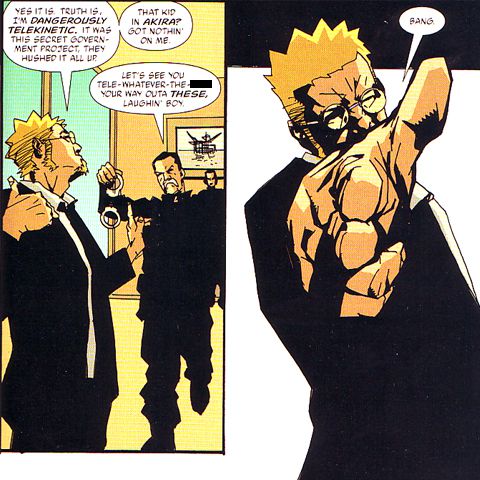
Now, about the movie... So here's the deal. It's got a lot of actors I really like in it - Idris Elba, Zoe Saldana, Jeffery Dean Morgan and Chris Evans (who basically steals the show in most of his scenes, and put him on the map for me, which made me psyched when he was announced as Captain America...) but it's... a good part of it's just a mess. The film is at its best when it's adhering closely to the source material, which means the helicopter bit at the beginning, Evans in the skyrise with the finger gun, the bits about the cash... but despite all of these amazing things they got right, oh my god what the living fuck is Jason Patric doing? Patric isn't a bad actor, but he's not even in the same movie. It's like the main cast gets they're doing "The Dirty Dozen" and Patric is convinced he's in "Batman & Robin"... you know, the one even Clooney is ashamed of. Also, the movie sticks to mostly the first act or two of the books, and the further it veers from the source material, the more it falls apart. If you're interested, read the books FIRST and then go back and watch the movie so you can enjoy the bits that are translated extremely well from the book (and to watch Evans actually dominate the role of Jensen) and then you can sort of let the rest of the stuff slide off your back...

Here's the trailer, to whet your whistle. Go buy the two books, even if the last act can get a bit operatic. You'll love them. I know I did.

Friday, May 16, 2014

Frank Turner - Tape Deck Heart - 2013

I guess I was late showing up to the "Frank Turner is cool" party, but Frank Turner is cool.

Frank Turner started as the frontman for a hardcore band, but found that after a while, he just wanted a change of pace, so he put out an album of songs like a troubadour - him and his acoustic guitar talking about life after hardcore. And damned if it hasn't been great stuff.

Some of the earlier albums were a bit shaky, sometimes getting too lost in his balladeering, but "Tape Deck Heart" is Frank's fifth album, and it's lock-solid from start to finish, mostly because it's gotten the balance down between bitter bluesy tracks and more upbeat catchy swinging songs. Frank's also willing to pick up the occasional electric and let it dance among the sounds, but doesn't ever let it overwhelm anything.

In many ways, Frank Turner's filling the space that Dashboard Confessional seems to have left - someone talking about their own life with a brutal bit of clarity, sometimes to their own detriment. Songs like "Good & Gone" include lyrics like "So fuck you Hollywood / For raising us on dreams of happy endings / In postcards of the prom kings and the prom queens / For teaching us that love was free and easy" and you can tell Turner's had a rough go at life from time to time, but he's right, and it's understandable, how frustrating life can be in comparison to the views of Hollywood.

Then you have a song like "Tattoos," where he talks about his love of tattoos and what they say about him: "Some people have one and  / Some have one that they're ashamed of  / Most people think that we're fools / Some people don't get it and / Some people don't care /And some of us we have tattoos..."

For me, though, the song on the album that really brings it all home is "We Shall Not Overcome," the anthem of, well, someone just like me: "We're all awkward understudies wearing comfortable shoes getting comfortable with doing it wrong / Missed the dress rehearsals and we had to rush a drink before the show but now it's show time and we're singing our song! /Because the bands I like, they don't sell too many records / And the girls I like, they don't kiss too many boys / Books I read will never be best sellers, yeah / But come on fellas at least we made our choice..."

The single that caught everyone's attention, though, was "Polaroid Picture" and I'll leave you with that...

Wednesday, May 14, 2014

Kavinsky - Outrun - 2013

It'll be a short couple of days, as I've got a concert tonight, and I've been making significant progress on a writing project I've been working on, so I want to keep my forward motion on that. That said, I do want to give you music to listen to. So today, I give you Kavinsky.

Kavinsky doesn't work fast, having only put out one album and a handful of EPs since starting making music almost ten years ago, but what he does make is incredible stuff.

His style is electronic music that's heavily influenced by early 1980s soundtracks and the synth-pop of the same era. It's for people who like Daft Punk and Justice, although Kavinsky definitely has a sound that is all his own. It tends to shift back and forth between sleek/fast and slow/slinky.

His first album, "Outrun," came out about a year ago, and is full of all sorts of tracks that will burrow their way into your ear and stick around forever. Here's "Protovision," one of the singles from the album.

Tuesday, May 13, 2014

VHS Or Beta - Diamonds And Death - 2011

VHS Or Beta are a band clearly out of time. One quick listen and you'll be immediately greeted with sounds that are clearly more influenced by disco, house and the electronic scene of the early 1980s than anything you'd normally hear today.

They have a dance-y feel to them, but it's seemed like they've been an underground band for a long time, much to my sadness. I suppose it's hard because it's difficult to hang a hook on their tracks. The lyrics aren't catchy and don't often draw you in, so on first impression, they can come across as a less memorable Duran Duran, but the instrumentation is so good, the longer you listen to it, the more it works its way into your brain. The songs are perfect for grooving to, and they're absolutely spot on for a warm summer evening.

"Diamonds And Death" is their third album, and probably their most accessible, particularly the catchy "I Found A Reason," but "Breaking Bones" actually got a video, so I'll leave you with that.

Monday, May 12, 2014

Scott Pilgrim - 2004-2010

Some of you may have seen the awesome Edgar Wright film "Scott Pilgrim Vs. The Universe," but didn't know it was based on a comic book. Some of you may not have even seen that film. In both cases, you should correct your mistake, because Scott Pilgrim is all sorts of crazy awesomeness.

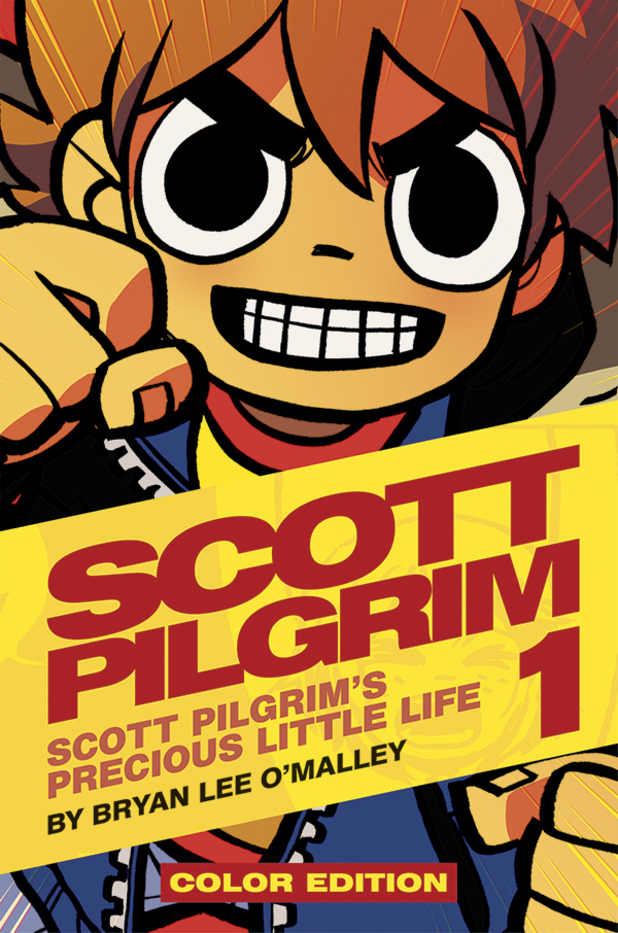
Scott Pilgrim is a series of six graphic novels by Bryan Lee O'Malley, which were originally done in black and white but are being colorized now (in addition to having a few extra scenes put back in). They detail the story of one Scott Pilgrim, a Canadian slacker and part-time bass player in the band Sex Bob-omb, who's trying to get his life together and win the heart of the beautiful American trans-dimensional delivery girl Ramona Flowers. To do so, however, he must defeat her seven exes, who have formed a league of sorts. (Because, y'know, bad guys tend to hang out together.) Oh, Scott's also sort of dating a high school girl when he meets Ramona, so there's that whole mess to figure out as well.

Scott Pilgrim is probably only targeted for people between the ages of 21-40, simply because a lot of the pop culture references will be lost on everyone else. That said, it's highly improbable than anyone will get all the references on their first time through, even someone as popped out as me. There's band references, comic book references, video game references (a LOT of videogame references), television references... it goes on and on. I mean, bad guys turn into coins when they're defeated. How can you go wrong with anything that has that in it?

O'Malley's art style is a blend of manga and traditional comic book art styles, and in what seems to be the default for the book, O'Malley just takes whatever works and folds it in, so you'll see things like screentones (which haven't been used in American comics for a long time now), exploding panels, full page spreads, caption jokes... it goes on and on.

Scott Pilgrim's greatest strength, however, is its characters, and not just Scott and Ramona. There's also Wallace Wells, Scott's "cool gay roommate," who often steals the scene in almost any scene he's in. (And props to actor Kieran Culkin for getting the role pitch perfect in the movie. And, y'know, also stealing the scenes he's in...) And there's Kim Pine, Scott's high school friend (and his first girlfriend), the band's drummer who's angrier than most people would believe. Also, Knives Chau, the high school girl who's referred to as "Scott's fake high school girlfriend" early on in the book. And plenty others. Not to mention the evil exes, who are wildly diverse and mostly insane.

There's something wonderfully stop-and-start about Scott Pilgrim as both a character and a book. When it's moving forward, it feels like forward motion is the only possible thing that could be happening right then and there. When it's dwelling on a moment, you almost want that moment to last forever. And Scott as a character is the exact same way - he doesn't seem to have any 1st gear, only neutral and 4th.

And, if you haven't seen the movie "Scott Pilgrim Vs. The World," you really should. It's from Edgar Wright, who's brought you such pop classics as "Shaun of the Dead" and "Hot Fuzz," and who's directing "Ant-Man" for Marvel. (He also did a marvelous TV show called "Spaced," but I'll talk about that another day.) I've never understood why the film wasn't a monster hit, but maybe it was just too clever for its own good, a distinct possibility considering the film makes fun of hipsters more than a little bit...


The whole series is out in black and white now, and the first four volumes are in color, with the fifth one coming in June and the sixth one probably the end of this year or the beginning of next (although it could be next summer. Who the hell knows.)

Friday, May 09, 2014

The Streets - A Grand Don't Come For Free - 2004

If The Streets had ever made an album as consistently great as their highlights, they probably could've ruled the world. But the problem is that each of the albums that Mike Skinner put out as The Streets was half full of amazing tracks and half full of things that might've been good but get caught on some thing instead.

"A Grand Don't Come For Free" was Skinner's second album as The Streets, following "Original Pirate Material," which had made him something of a star in his native England. The Streets were a sort of slice-of-life urban British rap and skittish electronic hip-hop beats, and they were very much focused on the perspective of an everyday fellow, usually Skinner himself (or some stylized version thereof), which makes it a welcome change from rap focusing on big money, big cars and bigger-than-life egos. Which isn't to say that Skinner doesn't have an ego every now and then. But The Streets were grounded, never forgetting just how close he was to his whole life falling apart, or how close he still could be.

Part of the reason I recommend starting with "A Grand Don't Come For Free" is that even though it has a few uneven tracks, the whole thing is one concept story, a month in the life of Skinner as he's trying to figure out how to get his life in order. From the opening of "It Was Supposed To Be So Easy" (which is probably my least favorite track on the album, but sets the stage of the overarching story) to the closing mini-epic of "Empty Cans," the album charts Skinner's life as he tries to figure out where his one thousand quid disappeared from his flat, blaming his roommates, his girlfriend, himself... He getting frustrated as bills start piling up, as he goes to a club and can't find the people he's supposed to meet up with (hint: she's cheating on him with his friend/roommate), as he and his girlfriend get into a row that might be the end, as he tries to pick up a girl in a bar but decides she's too full of herself to bother, and his fucking television is on the fritz...

There's something unique and fantastic about Skinner's delivery, almost like a white, British suburban version of Busta Rhymes, nimble and intricate. Skinner delights in spinning a yard, letting the story unfold a bit at a time, building and building, layer by layer, which makes for elaborate tales. And Skinner pays attention to the little details, like how cell phones would always cut out back then, or how he had to stand in a specific spot in his kitchen to not lose signal, or the taste of hairspray when he enters a club.


"Blinded By The Lights" was the first song from The Streets that hooked me hard. I've been in a few clubs in my day, and that sense of disorientation and frustration is something most people have felt in a club at some point. You know things are going wrong, and you feel like you should just get out of there, but you told people you'd meet them there, and you're going to stick it out, even if it comes back and bites you in the ass. (Hint: It does.)

But one night isn't the end of the world, and as Skinner's trying to figure out what to do with himself, he's considering pretty girls at a local chip shop, but decides he can't be interested in any girl who's too full of herself, and many, many of them are. The song's called "Fit But You Know It," and it's probably the most playful on the album, cheeky and smug in all the ways of over confident youth.


"A Grand" starts to go downhill right after that, as Skinner gets into a fight with his friends, and it comes out that one of his friends has been sleeping with his girlfriend, and now she's going to go off with him, leaving Skinner heartbroken, desperately pleading, trying to say whatever magic words will keep her around in "Dry Your Eyes," but it's all for naught, as she leaves anyway. And the album feels like it's crumbling into sadness.

"Empty Cans" is the last track, and it starts angry and ends hopeful, and you can hear the background music slowly changing with Skinner's mood, as he starts to get his life back into some semblance of sanity. And all the lessons that have been thrown in his face over the album have started to sink in. And he's not mad anymore, because he realizes he's got to take care of himself first and foremost, and can't depend on other people to be what props him up.

The album paints such an elaborate picture of a guy's life falling into despair and slowly peeling his way out from it, whether he's earned it or not. Maybe that doesn't even matter. Skinner's aware of his own problems, and he knows his self-loathing and confrontational attitude are part of why he gets into these messes. (Also, by the end, he's learned the most important lesson is that he needs to be a bit smarter about the company he keeps.)

The closing words: "The end of the something I did not want to end / Beginning of hard times to come / But something that was not meant to be is done / And this is the start of what was..."You'll find something to like about The Streets. I know I always do...

Thursday, May 08, 2014

Mogwai - Come On Die Young - 1999

From time to time, people ask me - what do you listen to while you're writing? My immediate response is "post-rock." Their immediate response is "what's that?"

Post-rock is generally described as instrumental rock, usually with intricate melodies. It's sort of math rock without a vocalist, a lot of the time, although the tempo and approach each band takes varies greatly, and each band tends to vary their approach from album to album some as well. Take Mogwai, for example.

Mogwai were sort of my introduction into the post-rock rabbit hole, via Kevin Shields, the guitarist from My Bloody Valentine. In 1998, it had been 7 years since My Bloody Valentine's "Loveless" had come out, and we were hearing rumblings that they were working on another album (which wouldn't come out until 2013, but hey, you know...) so I was trying to find anything else of theirs they were putting out. And I came across a remix that Kevin Shields had done for this band called Mogwai, so I picked up Mogwai's remix collection and found it interesting.

When "Come On Die Young," Mogwai's second album, was coming out, I was working for the college newspaper, The Daily Nebraskan, as an A&E reporter/critic, as well as a columnist. When music came into the office, the editor got first pick of stuff he wanted to review, but after that it was fair game. And when CODY (as it's called for short) came in a week or two before release date, I was all over it.

Later in their career, Mogwai would get a lot more active and busy with their instrumentation, but CODY is them at their dirge-est. Most of the songs are slow and methodical, often building up to large waves of heavy noise, but some of them are quiet and delicate, like the soft-spoken "Waltz for Aiden."

I don't know that I'd say CODY is a jumping on place, but it's certainly music to help me focus on my writing, so in that regard, it's definitely worth picking up...

Wednesday, May 07, 2014

The Glitch Mob - Drink The Sea - 2010

I have Avri to thank for this one. See, Avri's into EDM/electronic music a lot more than I am. At one point, the two of us were driving into the city to see a concert - I think it was Juno Reactor, and man was that show a story unto itself - when we got into a discussion about styles of electronic music. Avri found it fascinating that I liked some stuff (I had a particular love of The Chemical Brothers and Future Sound of London) but that whole genres of electronic music (such as happy hardcore) I found pretty boring. So I told him what I'm looking for in electronic music - interesting sounds, a good beat, but most importantly, a melody line that evolved and moved forward.

See, here's my beef with a lot of electronic music. I hear a ton of stuff that is basically "set beat, add in one or two recurring higher pitched effects, let play for eight minutes." So much EDM is just a drum pattern with a few pieces of warbly nonsense over it. I want melody, I want a sense that I'm not just listening to a beat that'll go on for an arbitrary period of time and then stop for no apparent reason. I want a song to be just that, a song.

That was when he recommended I check out The Glitch Mob. They'd been mostly a touring act, playing festivals and west coast shows, and didn't even have an album out, but they had a few songs floating around online and I liked what I heard, and their first album, "Drink The Sea," was just about to drop.

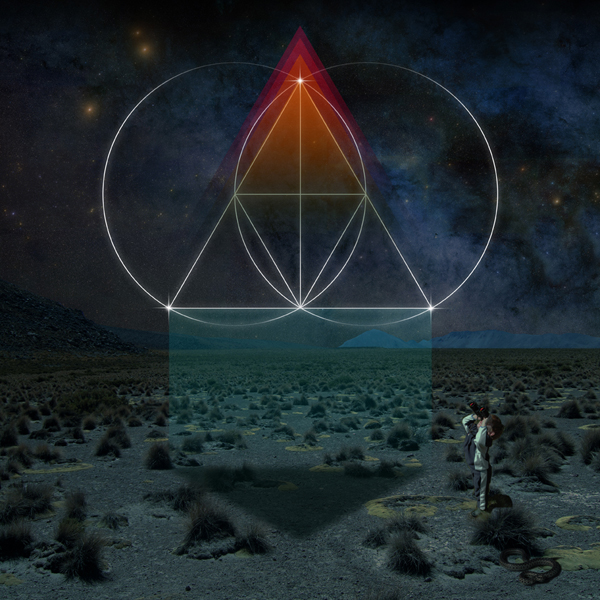
"Drink The Sea" was everything I wanted it to be. It was full of catchy hooks and big beats and, most importantly, songs. The sounds were fantastic and varied, but there was a sense of unified style to it. All in all, it's a great debut. If you're like me and expect more from your electronic music, you could do a lot worse.

Tuesday, May 06, 2014

Aerosmith - Pump - 1989

When I was back in Nebraska over Christmas, I spent a bit of time hanging out with my oldest friend Topher, and we found ourselves talking about music we'd been listening to a lot when we were younger. Right around the time he and I became friends, back in 1989 (back in 7th grade, for those of you who are curious), he was heavily into one album in particular - Aerosmith's "Pump."

I was just starting to branch out into music past the stuff that my folks listened to - mostly older stuff like The Kingston Trio - and was struggling to find music that I liked that was mine. A lot of kids in school were listening to stuff like New Kids On The Block or Milli Vanilli, and I found that kind of stuff didn't appeal to me at all. There were also a bunch of people listening to Skid Row and Motley Crue, neither of which struck a chord in me at the time. (I've actually come to dig some of that weird sleazy hair metal as I've gotten older, but only in small doses.) My dad liked listening to a lot of musicals, and my mother was a die-hard Michael Bolton fan. Clearly, I needed to find something that was outside of the sphere of influence I had.

My first year of junior high, my homeroom had a number of people in it who kept mostly to themselves, but there was one kid who was always doodling on pieces of paper before class started. I remember I walked over to him and said I thought his drawings looked cool. He told me the one he was working on was crap, and he was embarrassed I saw it. So I asked him to show me some of his cooler stuff. And that was how I met Topher.

Topher's family was about as different from mine as I could imagine. He was the oldest of three kids; my baby brother had literally come along a year ago, when I was 11, with no siblings in between. His folks listened to Pink Floyd and Led Zeppelin; I'm not sure my dad knew who Led Zeppelin were. His family lived in North Omaha; my family lived in Central Omaha. (I know, many people are thinking - it's Omaha... how different can the regions be? Well, how different are Queens and Manhattan - they're both New York City, right? Yeah, Omaha regions have that kind of disparity too...) Hell, when Topher's mom came to pick him up from our house after his first sleepover, I thought she was his sister. But we were damn near the same age (he's eight days older than I am) and we got along like a gang of thieves.

He ended up being my roommate for much of college, although things soured when I moved out to California, for the more predictable of reasons. (Answer: A girl.) Despite the fact that Topher and I went through some rough patches, we made amends three or four years back, and I've made it a point to hang out with him every time I've been back in Omaha since. The last time I saw him, I hated to leave. The rat bastard really is probably one of my best friends in the world.

So, anyway, when we were just starting to become friends, I remember we were walking to his house after school one day, and I was bitching about all the horrible music that people were listening to, and he started telling me about Aerosmith's "Pump." I had vague recollections of hearing Aerosmith on a classic rock station, and asked him if it was the same band. It was, and when we got to his house, he put on his tape of "Pump" and we listened to the whole thing, start to finish.

"Pump" was one of Aerosmith's biggest hits, carried to mainstream success on the backs of two singles - "Love In An Elevator" and "Janie's Got A Gun." For those of you who are only familiar with Aerosmith from "I Don't Wanna Miss A Thing," man, are you in for a surprise when you listen to their earlier stuff. Aerosmith was a dirty, sleazy rock band in the 1970s that had sort of fallen victim to its own excess, but the original lineup reunited in 1985 for the album "Done With Mirrors." That album didn't have much success, but then Run-D.M.C. covered "Walk This Way" and suddenly people were interested again, so the next album, "Permanent Vacation," brought them back into vogue. By the time "Pump" hit, the band was riding the high wave again.


"Love In An Elevator" was a smash hit. It had the perfect blend of gritty blues rock that the band was known for blended with just the right amount of pop-metal to get kids hooked. And just when it seemed like that song's time was passing, "Janie's Got A Gun" was released as the second single.


The song caught on, in no small part due to the gritty video that matched the dark and foreboding tone of the song. (Fun fact! The video was directed by a guy who's gone on to some renown since he turned his attention to feature films. David Fincher, who brought you Seven, The Social Network and the US version of The Girl With The Dragon Tattoo, among others.)

By 1990, Aerosmith were everywhere. They were on Saturday Night Live (and on Wayne's World!) and MTV's Unplugged. Then in late 1991, they played MTV's 10th Anniversary, with perhaps one of the most epic of epics, their 1972 song "Dream On" done with an orchestra backing them, and Michael Kamen was leading that orchestra. (Kamen died WAY too early...) There's nothing more I can say to top this performance, but you should track down "Pump," and probably at least a Greatest Hits or two...

Monday, May 05, 2014

Global Frequency - 2002-2004 - Warren Ellis

"You're on the Global Frequency."

I imagine I'm going to cover most of the series Warren Ellis has finished on the blog at some point - that's a notable distinction, as he's also just abandoned a number of them - but I wanted to start with Global Frequency for a number of reasons.

First and foremost, Global Frequency is twelve issues, meaning it's not a big investment (you can pick up the whole series in one trade paperback for $15 from Amazon) and it's not a major time commitment.

Next, Global Frequency is independent of everything. It, ostensibly, exists inside our world. No superheroes, no folks in tights, no endless backstory for you to have to go digging into. Twelve issues. You're in; you're out.

Also, each issue is illustrated by a different artist, so if you find you aren't connecting with a particular style, for whatever reason (I've known people like this over the years - they can't read a comic, no matter how good it is, because they don't like the artist's style - I've never understood it), you just need to make it to the next issue. Or even just skip to the next issue. The stories are, mostly, self-contained. Each issue will give you a part of a bigger picture, but isn't necessary to enjoy any of the other stories. Although, you probably want to read the first one to get a good sense of what the concept of the book is. But I'll clue you in on that too.

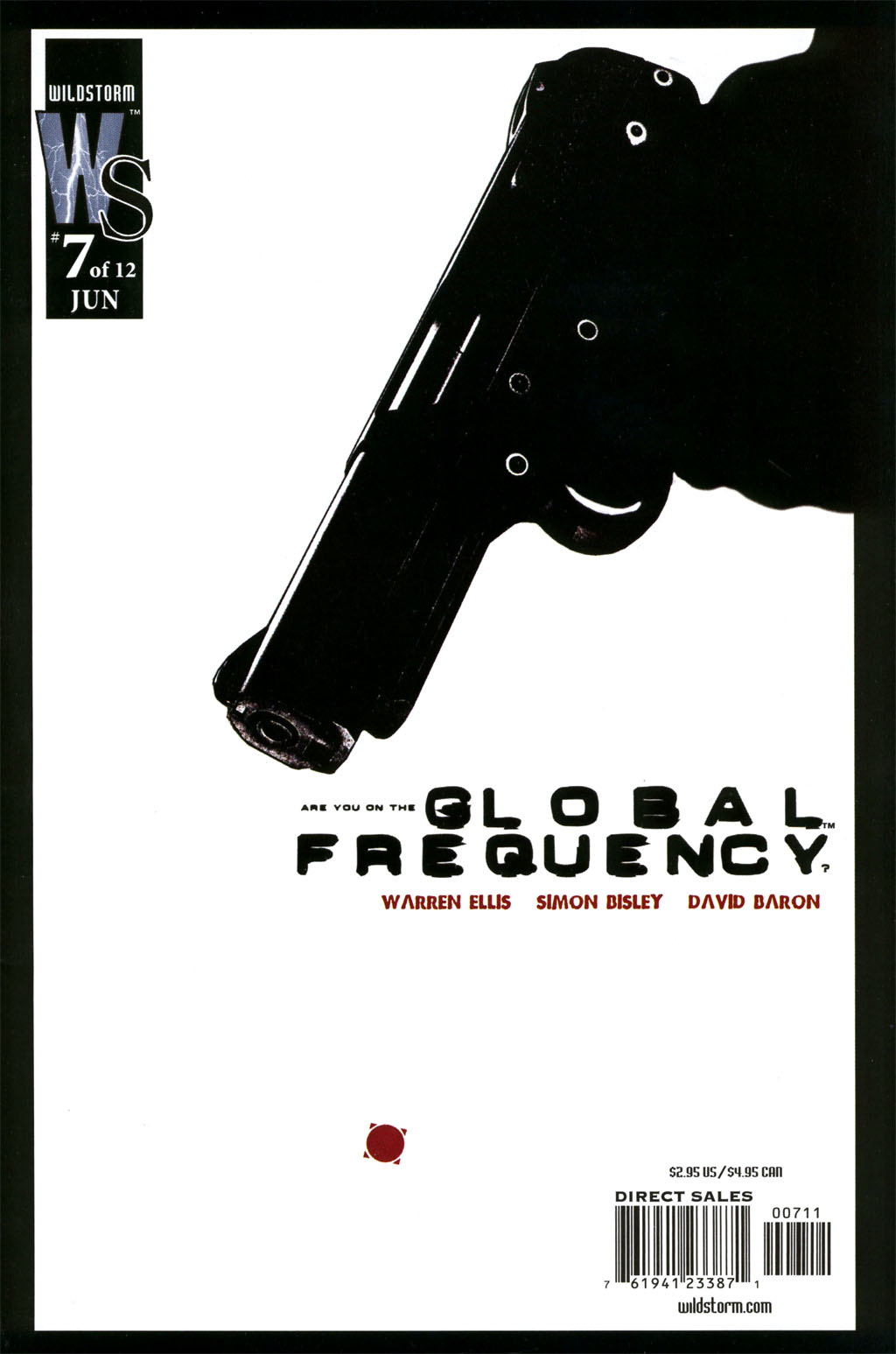
There exists an independent intelligence agency known as the Global Frequency. There are 1,001 members. It was founded by Miranda Zero, who was clearly an intelligence agent... somewhere, before this. Everyone on the frequency is activated by a cell phone when they are needed by the operator known as Aleph, who is the communications hub for Global Frequency. Agents don't know anything about each other until they are activated. Each person on the frequency was chosen for a skillset and/or a region of influence.

When a crisis arises, Zero selects a team, Aleph activates it and away they go.

If it sounds a little bit like Mission: Impossible for the modern era, you aren't wrong. Ellis specifically designed the series to function like television, with each episode being self-contained so that people could drop in or drop out at a moment's notice. Also, it granted Ellis a lot more leeway in story-telling. Only Aleph and Miranda Zero were considered "safe" characters - anyone else could be killed off without warning, because it wasn't like you'd see them next issue any way. It was also planned to be exactly twelve issues, so that Ellis could work with all the available artists he had that he wanted to at the time, and then be done. He's threatened to do a sequel for a long time now. He really ought to get his ass on that.

Another part of what makes Global Frequency so damn good is that it taps into Ellis' almost fetishistic interest in beyond-the-pale technology and philosophy. Because of the concept, he could dabble in things like advanced prosthetics, Cold War psychotropic drug studies conducted by the military, mass hallucinations, etc. Each issue is framed around a "big idea" that the rest of the story hangs on, but keep in mind, "big idea" can sometimes be something as simple as parkour, which has become pretty widespread in mainstream media since then. (Although in my opinion, no one's really ever topped District B13 in that regard, but that's a post for another day.) Ellis uses the spy framework to build stories that deal with bigger questions, the sorts of questions you don't see people often asking in comics these days. And all of this on an action thread that really sings, whizzing along at top speed.

After reading Global Frequency, you may find yourself thinking that it's screaming for adaption to television, and you're not wrong. But it's been tried. John Rogers (one of the two people behind "Leverage," the best damn TV show not enough people watched) wrote and executive produced a pilot that you can find floating around the internet that was great. It was an adaptation of the first issue, but changed things around so there would be a couple more stable characters, as television often seems to need. It didn't get picked up for series. Then in 2009, supposedly the CW was looking at trying to have a go at it again, but that's half a decade ago and nothing came of it, so maybe television's overlords don't understand how badly we want it.

Then again, Ellis has supposedly been working on a number of stealth projects as of late, some of which are television related, so I can hope...

Until then, you should pick up Global Frequency and see what mad scientists will be up to in the next couple of years. Because some of the concepts he puts forth are frighteningly plausible...

Friday, May 02, 2014

The Starting Line - Direction - 2007

I showed up late to The Starting Line's party. Way later than I should've, honestly. The band formed in 1999, and it wasn't until their third album, "Direction," that I heard of them, and by that point, it was pretty much too late. I've always been sad about that. The band's been on indefinite hiatus since finishing the tour for "Direction" back in 2008. They play one or two shows a year, generally in New Jersey, but it seems like that may be all we're getting for the foreseeable future, which is a damn shame.

"Direction" is a fun mix of pop, punk and rock that's got such amazing songs at the core of it, I'm surprised it wasn't a bigger hit. To me, "Direction" felt like the kind of record that The All-American Rejects always wanted to make in their heart of hearts, but could never quite get enough gusto to make. It's a blended album that has its own sense of identity, confident enough to grab from every sort of style it likes to play with.


"Island" was the song that hooked me hard. "It seems like we can never catch a break..." Yeah, I've been there, felt that. The whole album is full of amazing lyrics and taut songwriting, but alas, it seems like it wasn't enough. Hopefully they'll come back. I'd like to see them live at some point...

Thursday, May 01, 2014

Black Grape - Stupid Stupid Stupid - 1997

It's funny, but I've always found the Happy Mondays interesting but never essential, and I know that probably makes me a bad person. I'm sure at some point, the Happy Mondays will grow on me, and I'll be singing their praises, but I always found Black Grape to be a far better mix.

The Happy Mondays were sort of ground zero for Madchester, at least until The Stone Roses took over. The appeal of the Madchester sound was that it was a blend of, well, nearly everything. At the core of it, the idea was to take some the rave and dance music and incorporate it with rock'n'roll elements, but the Happy Mondays (and, by extension, Black Grape) took it a step further and integrated rap and hip-hop, whereas The Stone Roses would add psychedelic elements. HM and BG both did so as well, although nowhere near to the extent that the Roses did.

Part of the problem was that the leader of Happy Mondays, Shaun Ryder, seemed like he was poised for self-destruction when the band broke up. During the Happy Mondays, Ryder had always come across as somewhat thuggish, and his public overindulgence of drugs and alcohol was well documented. Instead, he came back a few years later with Black Grape, and their first album, "It's Great When You're Straight... Yeah." And that album, basically, just continued on doing the same thing the Happy Mondays had been doing, except with a bit more grungy rock vibe.

Black Grape's second album, "Stupid Stupid Stupid," opens with the song "Get Higher," a hilariously weird cutup mixing rap, rock and rave, as well as spliced together audio footage of Ronald and Nancy Reagan talking about the benefits of marijuana. Sure, it's not high end weirdness, but it's enough for a great laugh. From there, the album descends it a wild mixture of all the things that Madchester was about - rhythm, guitars, drums, manic vocals and a sense of energy. Some critics have said it isn't as strong as "It's Great" because it's doing much of the same, but I think it does it better, more refined, and that makes it a better album. Either one's good, really, but I prefer "Stupid."

It was to be Black Grape's last album, and eventually, the Happy Mondays reformed and put out a new album in 2007 that I haven't heard yet. I've heard it's okay, but not amazing. Still, it's mostly made up of the team that formed Black Grape, so we'll see. "Stupid Stupid Stupid" saw a lot of play from me when I was in college. It's a hidden gem you should give a listen to.

Wednesday, April 30, 2014

Blue Man Group - Audio - 1999

By now, most of the world knows about the Blue Man Group, but back in 1999, they weren't as well established. Sure, their theatrical show had been going for close to a decade, and was a smash hit in New York, Chicago and Boston, and they'd had a few TV appearances that was starting to raise their profile even more so, but they hadn't started their run in Vegas that helped them break into superstardom. So when "Audio," their first album, came out, it did okay, but it continued to build over years, as more and more people became familiar with the show and wanted to own some of the group's haunting music.

If you're not familiar with the Blue Man Group, it's three men who exist without words, nearly alien curious travelers who seek to bring new sounds into the world. It's as much performance art and pantomime as it is music, but oh, what wonderful music it is.

"Audio" contains pieces of the music used in the stage show, but is not the stage show. In many ways, it was intended to be sort of a companion piece to the show, to evoke memories of things you've seen if you've seen the show, but to put them in a new light. And, it was an attempt to capture the sort of mad scientist sound that the Blue Man Group have on an audio recording.

If you've unfamiliar with the Blue Man Group, they focus on "found sound," the art of using things in the world to make music in new and unusual ways. The piece they're most known for is a sequence using PVC tubes as drum tones. (A variation of that piece is on Audio, called "PVC IV.") One of my favorite instruments is called the Piano Smasher, which is a giant gong mallet being used to strike the open strings of a piano. It's gloriously weird.

"Audio" is a good place to start with the Blue Man Group, as the second album, "The Complex," is a bit more traditional and rock oriented (although still very heavy on the BMG instrumentation despite featuring Mr. Gwen Stefani - Bush's Gavin Rossdale - on vocals for a track), and Audio still has them being excessively weird for weirdness's sake.

Tuesday, April 29, 2014

Idlewild - The Remote Part - 2002

The year was 2002. I had just moved back from Las Vegas to the Bay Area, and NME magazine was dabbling with a radio broadcast online, playing bits of Radio 6, their "cutting edge" station on a stream free from their website.

It gave me something to listen to at work. A lot of it was crap. But every so often, something would stick and I'd find a new band. And once, just once, I'd heard a song that I became obsessed with.

That song was "American English" by Idlewild.

That silvery guitar comes ringing in the air like some long lost U2 song, and then Roddy Womble's trembling Scottish voice purrs into life over it. A few verses later, the steady base comes in, and just a bit past that, it all crashes together and the drums kick in. And as soon as the chorus kicks in, that arms-spread-wide, standing-on-the-edge-of-the-mountain, bathed-in-rain, grin-as-wide-as-the-day feeling swells over you. Or maybe that's just me.


Back then, in 2002, it wasn't easy to get music from England, and we were in a period where there was a lot of great music being put out in England. Thankfully, there was a record shop in Berkeley, next door to the comic book shop I visited then, Comic Relief, run by the irreplaceable Rory Root. The guy running the record shop imported a lot of CDs from England, and when I went in one day, he had two copies of "The Remote Part" by Idlewild, newly arrived. I grabbed one and must have had the biggest smile on my face when I went to pay for it.

"They any good?" the cashier asked me as he was ringing me up.

"If it's half as good as the single, it's fucking brilliant," I told him.

"Can you go grab me the other one?" he asked. So I did. He opened it up and popped it into the store's CD player immediately. "Huh. Pretty fuckin' good. I'll have to order more copies."

When I came back in two weeks later, they had five copies of the album in stock and it was in the "Employee Recommended" section. So I felt pretty good about that.


The rest of the album was, indeed, fucking brilliant. The first three songs were probably the strongest opening I'd ever heard on an album, starting with the intense energy of "You Held The World In Your Arms" and followed up by "A Modern Way Of Letting Go" before getting to "American English."


The album is filled with great songs, but the last song on the album, "In Remote Part/Scottish Fiction," is one of my absolute all-time favorite songs. The tail end of the song includes the poem "Scottish Fiction," read by its author Edwin Morgan, and was written specifically for the album. It's a marvelously grand bow for the album, and if it doesn't sell you on getting a copy, well, I don't know what will.


Their first two albums, "Hope Is Important" and "100 Broken Windows" have great songs on them, but are a touch uneven, and the band is still finding their footing on them, so I came in at exactly the right time. They've put out three great albums since releasing "The Remote Part" in 2002 - "Warnings/Promises," "Make Another World" and "Post Electric Blues," as well as a couple of greatest hits collections, "Idlewild - The Collection" and "Scottish Fiction: The Best of 1997 - 2007" and maybe we'll get something new this year, or next.

I don't have a lot of sad concert stories, despite the fact that I've seen over a hundred shows, but I've always been sad that Idlewild cancelled their last tour. I mean, I understand - Rod Jones, the band's guitarist, broke his collarbone - but I've never seen them live, and I truly want to. Then the band went on hiatus and it looked like they might be done for good. But I was happy to see the band reunited late last year and is working on recording a new album, and I truly hope they'll play the American dates they had to cancel on back in 2010, because they are one of the very few bands on my list of favorites I have yet to see live. So if they do tour the states, I'll see them, no matter where I need to get to.

They're that good.

Monday, April 28, 2014

Queen & Country - Greg Rucka - 2001-2007

It's no secret I love me a good spy story. The problem is that the comics world has, surprisingly, not a whole lot of good ones. Oh sure, we get a few odds and ends here and there, and I treasure each one that we get, but often they don't run long, or they tend to gloss over the sorts of stuff I find fascinating.

Greg Rucka's "Queen & Country" wasn't short and it wasn't afraid to get down to the nitty-gritty.

The series ran from 2001 to 2007 from Oni Press, and focused on SIS, the Special Intelligence Service for Her Majesty's Government, aka England. The main protagonist is Tara Chace, one of the Minders, aka the field agents.

Q&C draws its inspiration from a British television show called "The Sandbaggers," which aired from 1978 to 1980, when its creator, Ian Mackintosh, mysteriously disappeared. Seriously, you have no idea how much like a spy story the man's disappearance is. According to reports, he and two others were flying over the Gulf of Alaska, they made a short unscheduled stop at an old WWII era disused airfield, then shortly after, send a brief mayday signal and vanished.

The report was that the plane had crashed and all aboard were lost at sea. But there have been a bevy of unanswered questions about that day, wreckage was never found, and a guy even wrote a book about it. The prevailing theory is that Mackintosh is either living a new life somewhere or defected to Russia. No one's really sure. The hope was that there would be more clarity in 2013 after some things were declassified, but I haven't seen any real updates, so it looks like his fate is still unknown. How cool is that?

Part of the appeal of both Q&C and Sandbaggers is that they are very authentic portrayals of espionage work, i.e. there's lots of office work, planning, sitting around, discussing things, in addition to the more standard action fare.

Sure, James Bond is the go-to for showcasing big splashy set pieces, but actual espionage work has a lot of sitting and waiting, having to be ready, for when those moments of action do occur, they're often sudden and without warning, and there's no time for hesitation. It's hurry up and wait in the best and worst possible way.

And the office politics, oh man, don't get me started. You think your office has complicated squabbles... imagine if you knew that everyone you were arguing with was a trained soldier with high intelligence, excellent marksmanship and occasionally flexible morality, as needs might call for. And then throw in the fact that the government you work for doesn't often know what to do with you or your team, isn't sure they're making the right calls, wants to think about things forever, wants to second guess you and your information, and reserves the right to insult you if anything goes wrong, whether or not you listened to them in the first place. It's not just a nest of vipers, it's the whole damn pit.

Another part of what makes Q&C so compelling is Chace herself, who is both highly capable and an utter mess, as it feels like many people in the espionage field are. We see Chace, warts and all, being dangerous and smart, and yet still coping with personal problems and political struggles. 

After the series' conclusion, Rucka's written three novels continuing the stories, but I've always felt that Q&C sung better in illustrated format. That said, there's been the potential of a movie circling around for a while, with Ellen Page supposedly in negotiations to play Chace, and a director officially being announced in March, but as with all comic book translations, I won't believe a word of it until I hear the movie's actually filming.

Q&C isn't the only successful espionage comic, but it's certainly had one of the longest runs, and it's easy to pick up, in 4 collected volumes, and all three novels are easily available as well.

Friday, April 25, 2014

Rez - 2001, 2008

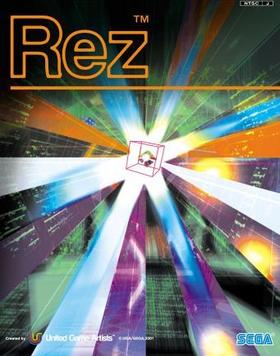
Rez is an audio-based shooter, where the combat is about rhythm. When it came along in 2001, rhythm games were still mostly a rarity, not the heavily established genre they are today. Sure, there were a few, but nothing like Rez. Hell, there hasn't been much like Rez before or since.

Rez was the brainchild of Tetsuya Mizuguchi, who would go on to make other fantastic games as Lumines and Space Channel 5. Mizuguchi started working at Sega building arcade machines like Sega Rally, but eventually he founded United Game Artists, who were created to make more experimental fare. Space Channel 5 was the first game from that group, and it was a dancing game with trippy space age visuals. From that, came the idea of Rez.

At its core, Rez is simply an on-rails shooter, a kind of game that's been around for a long, long, long, long time. The "on-rails shooter," for those of you less familiar with videogames, is a shooting game where you only have a limited amount of mobility, and have to concentrate more on shooting things out of the skies than you do avoiding things (although avoiding things is also important) because you aren't choosing the general path - it's on a rail, like a ride at an amusement park.

But that's where the similarities end, because Rez is more interested in the experience than it is being an overwhelming challenge. See, all the sound effects in Rez make music. You heard me. The game itself becomes a form of music creation, and somewhere along the line, your senses start to blur. You start killing enemies to a rhythm, which in turn, generally makes you play better. You are, for all intents and purposes, riding a groove. Each playthrough will sound similar, but different. You are, after all, playing a game and making music at the same time.

Also, each area in Rez has music put together by a different artist, with Area 5, the last, big world before the boss fights, featuring music from Adam Freeland, a track called "Mind Killer," which has become a staple in my workout mixes and fast driving mixes. From here, I turned into a Freeland fan, and at some point, I'll probably write about his music.


The game's graphics, as you can see, have a visual style unlike pretty much anything else in videogames. It's inspired by the Russian painter Wassily Kandinsky, and has a very unique look - empty polygons, neon lines, flat backgrounds - you will get an experience that is singular in games.

When Rez came out, it didn't sell that well. However, the game because the classic "sleeper hit" as people found the game in rental places, bargain bins and through word of mouth. Eventually, copies of Rez were going for as much as a couple hundred bucks on Ebay, and the game was reprinted, something that is extremely rare in the world of videogames after a title goes out of print. Years later, the team remastered the game for HD and it went on sale on Xbox Live Arcade, where you can still get it, and absolutely should.

Rez got a sequel/prequel of sorts called "Child Of Eden" that was good, but I think the marketing leaned too heavily on the game's support of the Kinect/Move, which, at the time, were still very much fringe products. It's still out there, though, and if you like Rez, you should pick up Child of Eden as well.

Sadly, Mizuguchi has reportedly turned mostly to development and isn't really directing games any more, but we can all hope he'll come back and bring us another amazing musical experiment at some point in the future. Until then, go and find the cult hit that is Rez.

Thursday, April 24, 2014

Ocean's Twelve - 2004

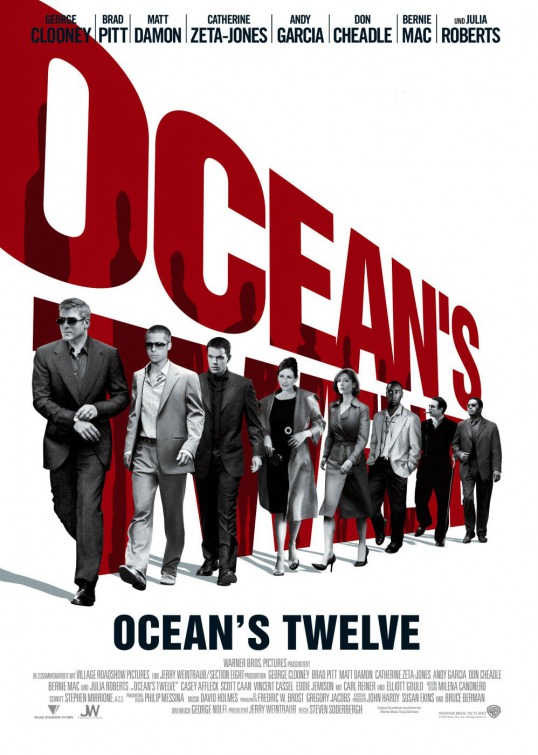
I fully expect a bunch of people to disagree with me on this one, but I think "Ocean's Twelve" is a good movie.

I know, I know, I can hear people now. "I didn't like it as much as 11, or 13!" "It wasn't the same kind of movie!" "Entertainment Weekly put it on their list of 25 Worst Sequels Ever!" Well, just because you didn't like it as much as 11 or 13 doesn't mean it isn't a good movie. And yes, it was a different kind of movie. (And Entertainment Weekly is full of shit on this one.)

See, the first "Ocean's" film in the modern era was meant to be an homage to the swinging sixties. When they came back to do "Thirteen," they did another sixties style film, akin to the first one. But "Twelve" is something rather different. "Twelve" is a seventies-style European movie.

If you look at even the very way that 11 and 13 are shot, and compare them to 12, you'll see the difference immediately. All three films use very saturated color and bright palettes, but 11 and 13 are very crisp looking movies, whereas a lot of 12 is very grainy. 11 and 13 are going for pop, and 12 is going for a low sizzle. Much of 11 is set under the neon jungle of Las Vegas, but 12 is set all over Europe.

Also, I appreciate all of the short hand that stuck around from the first movie. We get to see Danny and Rusty finishing each other's sentences, and it reinforces point that these guys know each other so very well. And the scene of all the guys arguing about how Benedict called it "Ocean's Eleven" is absolutely priceless. "It's just, I thought we agreed to call it The Benedict Job." Man, it kills me every time.

In the end, I think people were expecting 12 to be exactly like 11, and that isn't what happened. Each of the three films is somebody's movie. The first film is Danny's movie. The last film is Reuben's movie. And the middle film, well, it's Rusty's movie. Everything is a little more complicated, a little more likely to go off the rails, and requires a little bit more trust. Those of you who only saw it once, go back and watch it again, and try to keep an open mind about it this time. I think you'll be surprised how good it is...